Low carb recipes with asparagus are useful when you want a vegetable-forward meal that still feels complete. Asparagus cooks quickly, brings a clean savory flavor, and works with eggs, chicken, salmon, beef, shrimp, cheese, lemon, herbs, and rich sauces. The goal is not to remove every ingredient that makes a meal satisfying. It is to build a plate around a clear protein, a generous portion of non-starchy vegetables, and a measured source of fat or sauce.
This practical guide focuses on recipes you can actually use during a busy week. It includes sheet-pan asparagus with chicken, a creamy skillet, lemon salmon, egg-and-asparagus breakfast cups, a beef stir-fry, a warm salad, and a portable frittata. Along the way, it explains how to choose asparagus, control carbohydrate-heavy sauces, keep textures pleasant after refrigeration, and adapt portions to your needs. Nutrition targets vary by person, so the recipes are written with transparent ingredients rather than exaggerated promises.
If you are planning a broader menu, begin with the snack ideas hub for smaller pairings, then decide whether the asparagus dish will be breakfast, lunch, dinner, or a packed meal. That decision affects portion size, storage, and how much extra protein you need.
Why asparagus works so well in low carb cooking
Asparagus gives a dish a firm, lightly sweet, grassy flavor without relying on a starchy base. It is substantial enough to roast or grill, but tender enough to fold into eggs, soups, and skillet meals. The stalks also create visual contrast on the plate, which can make a simple meal feel more intentional. When you cook asparagus briefly at high heat, the tips become tender while the thicker stalks keep a little bite. That texture is valuable in meal prep because it is less likely to turn completely soft than delicate leafy greens.
The most important cooking decision is thickness. Thin spears may need only a few minutes in a hot pan or oven. Thick spears benefit from trimming and a little longer cooking, but they still should not be boiled until limp. Snap or cut away the woody ends, then group spears by size when you can. If the stalks vary widely, place thick pieces closer to the heat and add thin pieces later.
Asparagus is not a magic weight-loss food, and a low carb label does not automatically make a recipe balanced. It is simply an efficient vegetable to combine with ingredients that supply protein and flavor. Use the whole plate as the reference point: protein portion, vegetable volume, added fats, sauces, and any side that contributes carbohydrate.
Recipe 1: Lemon garlic sheet-pan chicken and asparagus
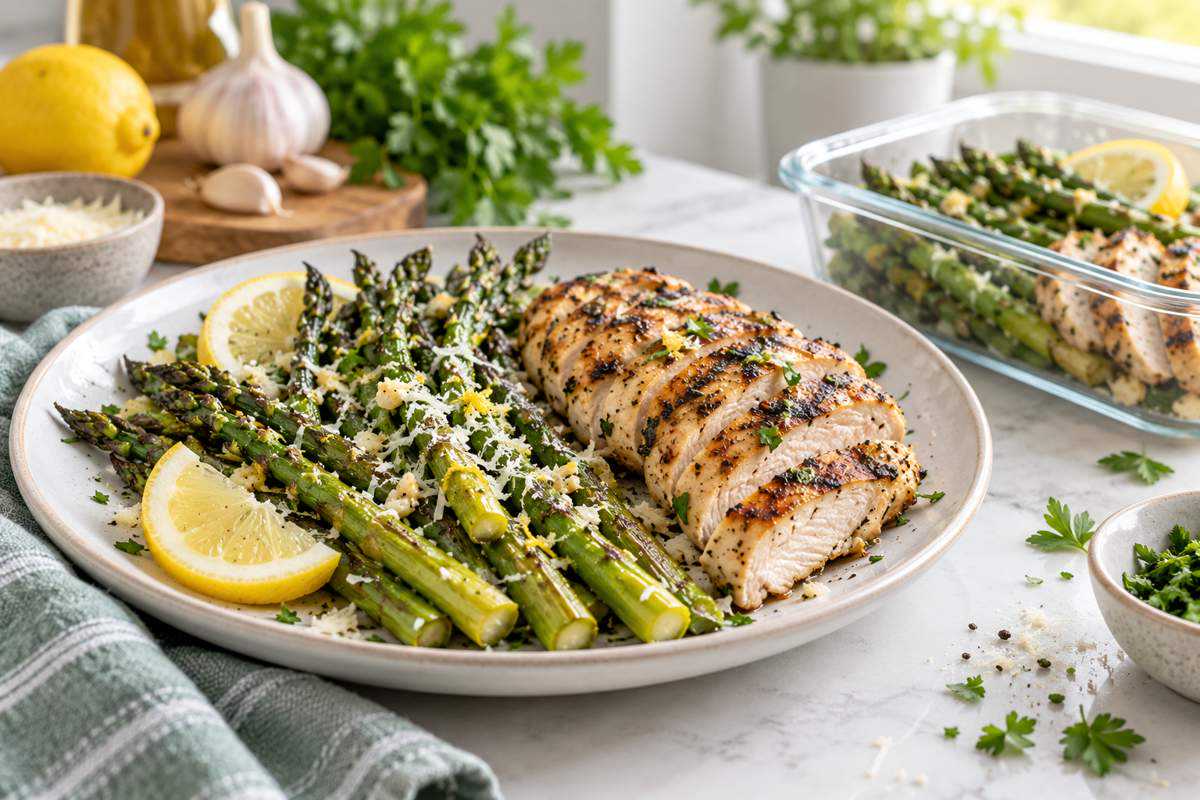
For two generous servings, use two boneless chicken breasts or four small chicken cutlets, one large bunch of asparagus, one lemon, two garlic cloves, one tablespoon of olive oil, black pepper, paprika, and a modest amount of grated parmesan if desired. Pat the chicken dry. Toss the asparagus with half the oil, pepper, and a little salt. Rub the chicken with the remaining oil, garlic, paprika, lemon zest, and pepper.
Heat the oven to 425°F or 220°C. Place the chicken on a sheet pan and roast it for about ten minutes before adding the asparagus, especially if the chicken pieces are thick. Continue cooking until the chicken reaches a safe internal temperature and the asparagus is bright green with browned tips. Squeeze lemon juice over everything after it leaves the oven. Add parmesan at the end so it remains savory rather than becoming a heavy coating.
The key is to keep the vegetables from sitting in chicken juices for too long. Use a large pan with space between the pieces. If the pan is crowded, the asparagus steams and the chicken may not brown. For leftovers, slice the chicken and store it separately from a fresh lemon wedge and a handful of herbs. Reheat the chicken gently and add the asparagus during the last minute so it does not overcook.
Recipe 2: Creamy asparagus and chicken skillet
This skillet is useful when you want a comforting sauce without a flour-based thickener. Slice cooked chicken or use thin raw cutlets. You will also need asparagus, mushrooms, garlic, unsweetened cream or a suitable dairy alternative, parmesan, lemon zest, and a little butter or olive oil. Sauté the mushrooms first because they release water. When they begin to brown, add the asparagus and cook until it is nearly tender.
Move the vegetables to one side and warm the chicken. Add the cream, garlic, parmesan, lemon zest, and black pepper. Let the sauce simmer gently until it coats a spoon. Do not boil aggressively, because dairy sauces can separate and become greasy. If the sauce is too thick, loosen it with a spoonful of water or unsalted stock. If it is too thin, continue reducing rather than reaching for a large amount of starch.
Check the label of any prepared cream sauce, stock, or dairy-free substitute. Some products add sugar, maltodextrin, or starch. A product can still fit your plan, but you should know what it contributes. Serve the skillet with additional roasted vegetables or a crisp salad. If you want bread-like texture, compare it with a measured serving from the keto bread guide rather than adding an untracked side.
Recipe 3: Salmon, asparagus, and lemon herb plate
Salmon and asparagus cook well together because both benefit from a hot oven and a bright finishing sauce. Place salmon fillets and trimmed asparagus on a lined pan. Season with olive oil, lemon zest, dill or parsley, pepper, and a little garlic. Roast until the salmon flakes easily and the asparagus is tender at the center. Cooking time depends on the thickness of the fish, so use appearance and a thermometer rather than a fixed promise.
Make a quick herb sauce with chopped parsley, lemon juice, olive oil, capers, and black pepper. Capers add salt and acidity, so taste before adding more. If you are avoiding dairy, this sauce supplies enough freshness to keep the plate from feeling dry. If you use yogurt, choose plain unsweetened yogurt and check the carbohydrate count per serving.
For meal prep, store the salmon and asparagus in separate sections of a container with the sauce in a small sealed cup. Reheat the salmon briefly or eat it chilled with cucumber and greens. Asparagus is often better at room temperature than piping hot, which makes this combination practical for a work lunch if it stays properly chilled.
Recipe 4: Asparagus and egg breakfast cups
Breakfast cups are a reliable way to turn a small amount of asparagus into several portions. Chop asparagus into short pieces and sauté it for two minutes so excess moisture leaves. Beat eggs with pepper, chopped chives, and a little feta or cheddar. Fold in the asparagus and optional cooked turkey, chicken, or smoked salmon. Pour the mixture into greased muffin cups, filling each only about three-quarters full.
Bake at 350°F or 175°C until the centers are set but not dry. Let the cups cool before removing them. They can be paired with avocado, a small salad, or a protein snack depending on the rest of the meal. If you use cheese or cured meat, remember that both can raise sodium quickly. A lower-sodium version can rely on herbs, lemon zest, black pepper, and roasted garlic for flavor.
Keep the cups refrigerated in a sealed container and warm them gently. They are portable for a short commute when packed in an insulated lunch bag with a cold pack. They are not a reason to leave cooked eggs at room temperature for a long day. Food safety matters as much as carbohydrate tracking.
Recipe 5: Beef and asparagus ginger stir-fry
Slice flank steak, sirloin, or another tender cut thinly across the grain. Mix a small amount of soy sauce or tamari with grated ginger, garlic, rice vinegar, sesame oil, and chili. Keep the sauce measured; many stir-fry sauces become sweet because bottled versions contain sugar. Heat a wide pan until very hot, sear the beef in batches, and remove it before it overcooks.
Add asparagus and a splash of water, then cover for one minute to soften the thickest stalks. Remove the lid and let the water evaporate. Return the beef and add the sauce around the edge of the pan so it sizzles before coating the food. Finish with scallions and sesame seeds. Cabbage, mushrooms, or zucchini can extend the dish, but add them according to cooking time so the asparagus remains distinct.
If the meal is for a packed lunch, store the beef mixture away from fresh cucumber or herbs. Reheat it in a skillet or microwave until hot, then add the fresh garnish. The low carb lunch guide has more ideas for separating crisp components from reheated components.
Recipe 6: Warm asparagus, shrimp, and avocado salad
Roast or sauté asparagus until just tender. Quickly cook peeled shrimp with garlic, pepper, and lemon. Arrange both over greens with avocado, cucumber, and radish. Use a dressing made from lemon juice, olive oil, Dijon mustard, and herbs. Check mustard labels because some varieties contain added sugar, and use enough dressing to coat rather than drown the vegetables.
This salad works best when the shrimp are warm and the greens remain cool. Do not toss everything together while the pan is still very hot. The heat wilts the greens and makes avocado soft. For transport, keep the dressing separate and add avocado close to serving. A small portion of seeds can add crunch, but it is still energy-dense, so measure if you are monitoring total calories.
For a snack-sized plate, use fewer shrimp and add a crisp vegetable. For lunch, increase the protein and include enough fat to make the meal satisfying. A recipe cannot determine the right portion for every person. Appetite, activity, medical needs, and the rest of the day all matter.
Recipe 7: Asparagus and cauliflower soup
For a silky soup, sauté onion or leek in a small amount of oil, then add cauliflower florets, asparagus, garlic, and unsalted stock. Simmer until the vegetables are tender. Blend until smooth, then add a small amount of cream, plain yogurt, or olive oil. Finish with lemon juice, pepper, and chopped herbs. Keep some roasted asparagus tips aside to use as a topping so the soup has contrast.
Cauliflower adds body without requiring flour, but it can also make soup very thick. Add stock gradually and taste after blending. If the soup tastes flat, acidity and herbs usually help more than extra salt. If you use packaged stock, compare sodium levels and do not assume a product labeled natural is low in salt.
Cool soup promptly, store it in shallow containers, and reheat only the portion you plan to eat. Use a leak-resistant thermos for a short work trip, but keep the soup hot or cold according to safe handling practices. Pair with an egg cup or shredded chicken if soup alone does not provide enough protein.
Recipe 8: Asparagus frittata for meal prep
A frittata is a flexible way to use asparagus ends that are tender enough to eat. Sauté asparagus with mushrooms and scallions. Whisk eggs with pepper, herbs, and a small amount of cheese. Pour the eggs over the vegetables, let the bottom set, then finish in the oven until the center is just cooked. Avoid overbaking; residual heat will continue to set the eggs.
Cut the frittata into portions after it cools. Serve with greens, tomatoes if they fit your plan, or a side of leftover roasted chicken. The frittata can be eaten cold, warmed, or folded into a lettuce wrap. That flexibility helps prevent a prepared meal from feeling repetitive.
Meal prep is easier when you intentionally create components. The batch chicken guide shows the same approach: prepare a neutral base, then change the finish with herbs, acid, sauce, or a different vegetable. Asparagus can play the same role across several meals without requiring a new recipe every day.
How to choose sauces and sides
The sauce often changes the nutritional profile more than the asparagus. Read serving sizes for teriyaki, honey mustard, sweet chili, bottled barbecue sauce, and creamy dressings. Look at total carbohydrate, added sugar, sodium, and the order of ingredients. If sugar appears near the beginning of the list, use the product sparingly or make a simple alternative.
Acid is an efficient way to increase flavor without adding much volume. Lemon, lime, vinegar, mustard, pickled jalapeño, and capers can make roasted vegetables taste lively. Herbs, toasted spices, garlic, ginger, and scallions add aroma. A sauce based on these ingredients may need a little oil, yogurt, tahini, or butter, but the amount can be measured clearly.
Choose sides according to the use of the meal. A lunch may need more protein and a durable vegetable. A dinner may include a richer sauce and a larger salad. A snack plate may use asparagus spears with egg, cheese, or a dip. If you want more recipe ideas for small plates, see the low carb appetizer guide and adjust the portion rather than copying a full meal size.
Storage, reheating, and portability
Asparagus has the best texture when it is cooked until tender-crisp and cooled without being trapped in steam. Spread roasted spears on a plate for a few minutes before sealing them. Store sauces separately, especially creamy or acidic sauces that can make vegetables slippery. Label containers with the date and use a cold pack for foods that need chilling during transport.
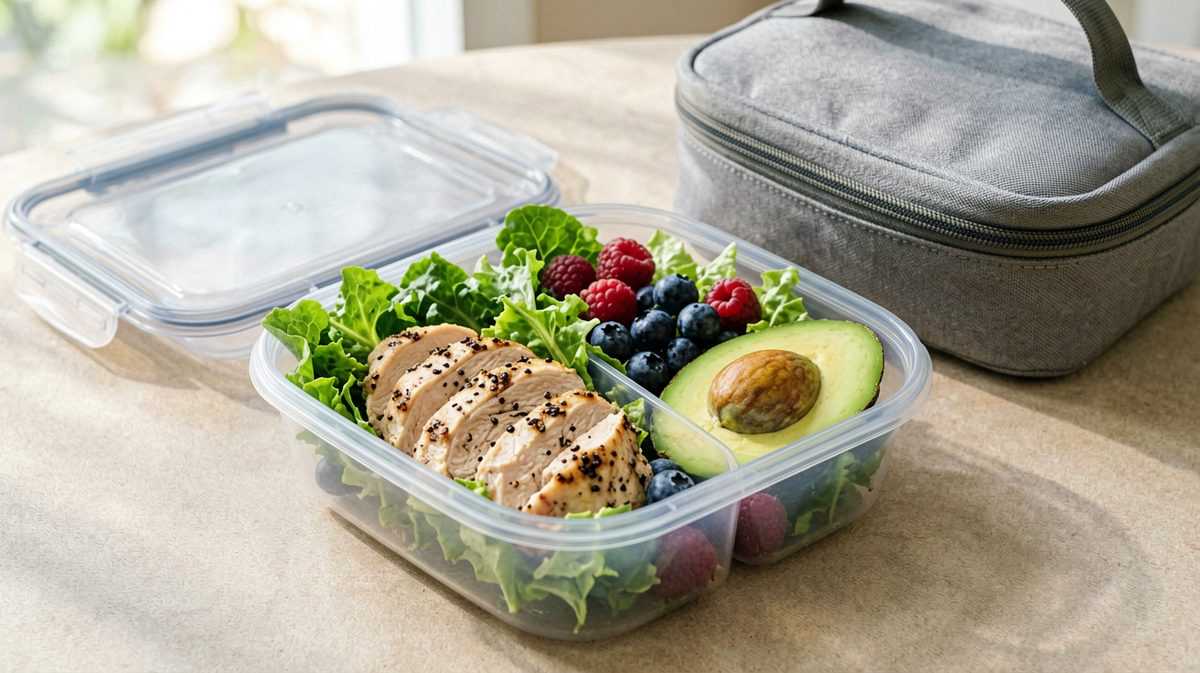
For an office meal, pack a protein, asparagus, and garnish in separate compartments. Chicken and beef can be reheated, while shrimp and salmon may be more pleasant gently warmed or eaten cool. Keep lemon, herbs, cucumber, and avocado away from hot food until serving. For travel, choose egg cups, frittata slices, or a chilled salad because they are less messy than a thin sauce.
Reheat only what you intend to eat. Repeated heating softens asparagus and dries protein. A teaspoon of water can protect chicken in a covered container, while a fresh squeeze of lemon can restore flavor after reheating. If a prepared meal smells unusual, has been held at an unsafe temperature, or has an uncertain storage history, discard it rather than trying to rescue it.
Honest product disclosures and substitutions
These recipes can be made with ordinary grocery ingredients, and no branded product is required. When you choose packaged stock, sauces, cheese, deli meat, protein, or dairy alternatives, compare labels because formulas differ. “Keto,” “low sugar,” and “natural” are marketing terms rather than a complete nutrition assessment. Check the serving size and use the quantity that matches the recipe.
Substitutions should respect allergies and preferences. Tamari may suit someone avoiding wheat but is not automatically low sodium. Coconut aminos may taste sweeter and can still contribute carbohydrate. Dairy-free creamers may contain starches or sweeteners. If you replace salmon with tofu, chicken, or shrimp, reconsider protein quantity, cooking time, and the sauce that best matches it.
This article is general food information, not individualized medical advice. People using glucose-lowering medication, managing kidney disease, or following a clinician-prescribed diet should ask their healthcare professional how these recipes fit their plan. A low carbohydrate meal can still be high in calories, sodium, or saturated fat depending on the ingredients.
A simple weekly asparagus plan
Buy one or two bunches and use them in different formats. On the first day, roast asparagus with chicken. On the second, fold it into egg cups. On the third, add it to a ginger beef stir-fry. On the fourth, make a salmon plate or warm shrimp salad. Save the thinnest pieces for a frittata or soup. This sequence uses the same vegetable while changing texture, seasoning, and meal role.
Keep a short finishing kit available: lemons, garlic, herbs, vinegar, mustard, chili, and a measured oil. With those ingredients, you can move from Mediterranean flavors to a creamy skillet or an Asian-inspired stir-fry without buying several sugary sauces. If you already have prepared chicken or another protein, dinner can be assembled in the time it takes to roast the asparagus.
For inspiration beyond this topic, the low carb Asian food guide demonstrates how vegetables, protein, aromatics, and measured sauces can create variety. The same structure applies here: make asparagus the vegetable anchor, then select a protein and flavor direction that match the meal.
Final checklist
Before serving a low carb asparagus recipe, ask four practical questions. Is there a clear protein anchor? Did you measure the main sauce or added fat? Is the asparagus cooked enough to be pleasant but not mushy? If the meal is being packed, are temperature and storage handled safely? Those questions are more useful than relying on a label or a single “healthy” ingredient.
Asparagus is at its best when the preparation is simple and the plate has contrast. Roast it until the tips brown, add lemon or vinegar for brightness, pair it with a satisfying protein, and keep portable components separate. With those habits, the recipes above can support a repeatable low carb routine without turning every meal into the same bowl.