The best low carb appetizers do more than remove crackers or pastry. They give guests something easy to pick up, enough flavor to make the first bite interesting, and a clear place in the meal. A good appetizer can be fresh, warm, crisp, creamy, or savory without relying on a large amount of refined starch. The practical goal is not to make every bite taste like a traditional party food. It is to build an inviting first course that fits the menu, the available preparation time, and the way people will actually eat.
This guide gives a usable shortlist for home gatherings, workday snacks, and casual meals. It covers vegetable cups, egg-based bites, chicken skewers, mushrooms, cheese, dips, and small plated combinations. It also explains how to read labels, portion concentrated foods, store components, and keep portable appetizers safe. A low-carbohydrate label is only one part of the decision. Ingredient quality, protein, fiber, sodium, allergens, cost, and convenience all matter when an appetizer is meant to support a sustainable eating pattern.
Start with the snack ideas hub if you need a broader rotation. Then choose one anchor, one produce element, and one sauce or crunchy contrast. That simple formula keeps a tray from becoming a collection of random foods and makes it easier to estimate how much to prepare.
What makes a low carb appetizer work
An appetizer has a different job from a full dinner. It should create interest without making the rest of the meal impossible to enjoy. The easiest way to build one is to decide whether it is meant to be a welcome bite, a bridge for a delayed meal, or a substantial small plate. A welcome bite may need only a little protein and flavor. A bridge snack may need enough protein, fat, or fiber to make the next meal easier. A small plate may need the same balance you would expect from lunch.
Texture is especially important. A tray of soft foods can feel heavy, while a tray of only dry foods can make people reach for a sweet drink or a starchy side. Pair a crisp cucumber or seed cracker with a creamy dip, a tender chicken skewer with a fresh herb salad, or a rich cheese with something acidic. You do not need many ingredients. You need one or two deliberate contrasts that survive the way the food will be served.
Flavor should be recognizable and adjustable. Use lemon, vinegar, mustard, herbs, garlic, smoked paprika, chili, olives, or a measured spice blend to give a neutral ingredient a clear identity. If a packaged dip or seasoning is involved, check its serving size and added sugar. The appetizer may be low in carbohydrate while its sauce contributes more sugar or sodium than expected. Keep the label visible until you know the product works for your needs.
Fresh vegetable appetizers
Cucumber cups and boats
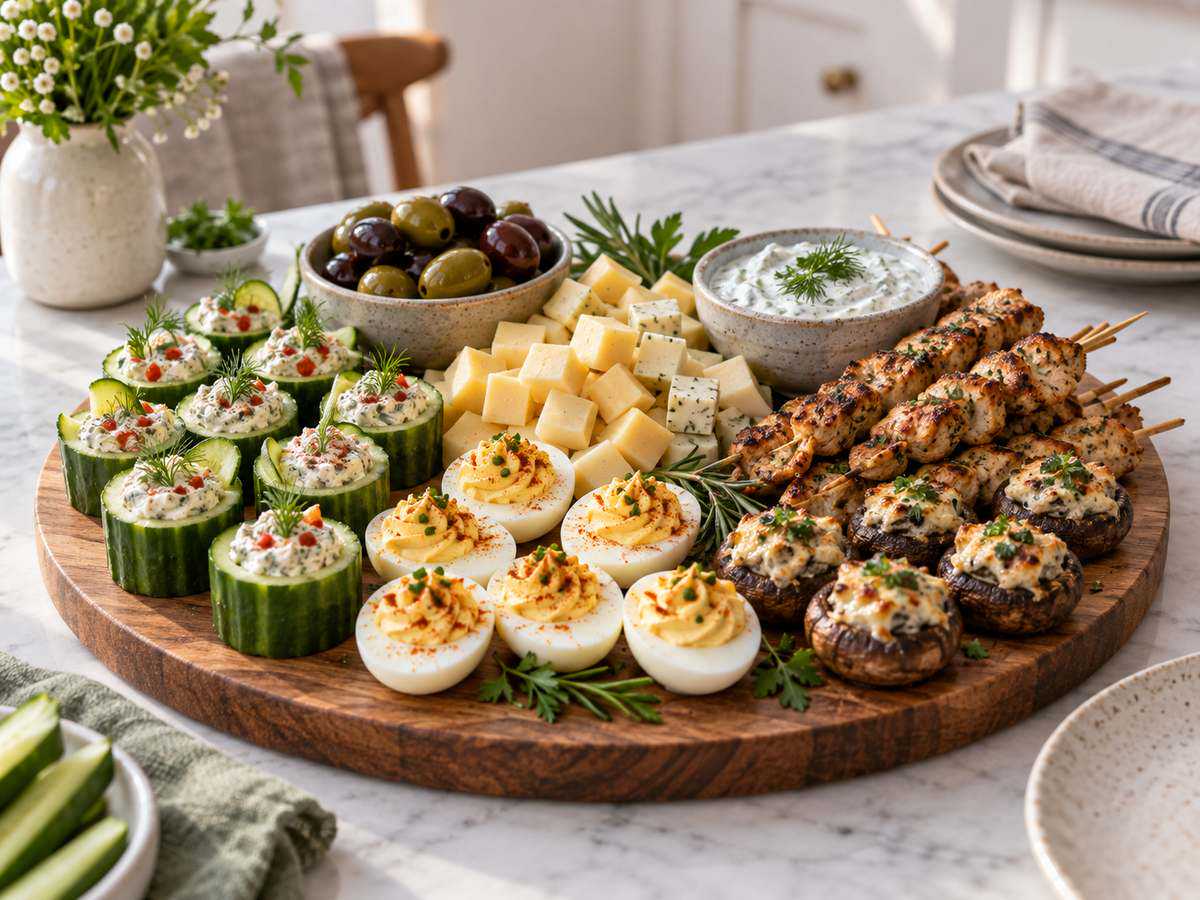
Cucumber is one of the most dependable low carb appetizer bases because it is crisp, hydrating, and easy to portion. Slice it into thick rounds and top each piece with tuna salad, chicken salad, cottage cheese, smoked fish, or a herbed yogurt spread. For a sturdier bite, cut a short section into a cup and scoop out some of the center. Dry the cut surface before filling so the topping does not slide immediately.
Keep the filling separate if the tray will sit for more than a short period. Cucumber releases water, and a creamy filling can become thin. For portable use, pack cucumber pieces in one container and the filling in a small sealed cup. Assemble just before eating. A squeeze of lemon, fresh dill, or cracked pepper can make a simple cup feel intentional without adding a complicated recipe.
Celery, pepper, and endive boats
Celery sticks are useful when you want a crunchy base that can hold a dip or soft filling. Bell pepper strips bring color and a mild sweetness, while endive leaves provide a naturally shaped spoon for egg salad, crab-style salad, or avocado mash. Choose the base according to the filling: celery works with rich or salty mixtures, pepper handles savory cheese, and endive is helpful when you want a clean, slightly bitter contrast.
For a better tray, cut all the vegetables to a similar size and arrange them in groups rather than mixing them randomly. This lets guests understand what each bite contains. If the food will travel, select vegetables that do not bruise easily and line the container with a dry towel. Avoid adding watery dressings until serving. The goal is an appetizer that still looks fresh after it has been carried across a room or taken to work.
Stuffed mini peppers
Mini peppers can be filled with cream cheese and herbs, seasoned ground meat, shredded chicken, tuna, or a small amount of egg salad. They can be served raw for crunch or roasted briefly for a softer, sweeter bite. Use a filling with enough structure to stay in place. If the mixture is very loose, chill it first or add a firmer ingredient such as chopped egg, cheese, or finely diced vegetables.
Portion size is easy to lose track of because mini peppers look small. Decide whether two halves are a tasting portion or whether the appetizer is replacing a snack. Include a protein-rich filling when the food needs to hold you over, and add a simple vegetable or salad if the peppers are part of a meal. The ingredient list matters more than the word mini on the package.
Protein-forward bites
Deviled eggs with a clear flavor plan
Deviled eggs are naturally suited to a low carb appetizer tray because they are portionable and satisfying. The filling can remain classic with mustard and paprika, or move toward herbs, curry seasoning, pickles, smoked fish, or chopped olives. Use enough yolk mixture to make the bite pleasant but avoid turning every half into a large spoonful of mayonnaise. A small garnish should reinforce the flavor rather than add decoration that is difficult to eat.
Make eggs ahead, but keep them cold and covered. If you are transporting them, use a container that keeps the halves from sliding and place it inside an insulated bag with an ice pack. Deviled eggs are not a good choice for a long unrefrigerated event. Prepare a smaller batch if you cannot control the storage conditions. Food safety is part of a successful appetizer plan, not an optional finishing detail.
Chicken, turkey, or seafood skewers
Small skewers make a tray feel festive without requiring bread. Use cooked chicken, turkey meatballs, shrimp, or another suitable protein with cucumber, olives, roasted pepper, or a firm cheese cube. Keep the pieces bite-sized and use a sauce that can be dipped rather than poured over the entire tray. A lemon-herb chicken skewer tastes very different from one with mustard and pickles, even when the basic protein is the same.
Cooked protein should be cooled and stored promptly. If you are using leftovers, reheat them safely before assembly or serve them chilled as intended. Do not leave meat or seafood at room temperature longer than current food-safety guidance allows. For a workday snack, use an insulated container and keep the sauce in a separate leak-resistant cup. The chicken batch-prep guide can help you prepare an anchor protein that works in both appetizers and meals.
Meatballs without a sweet glaze
Mini meatballs are an easy warm or room-temperature appetizer when the seasoning is doing the work. Beef, turkey, or chicken can be mixed with herbs, garlic, grated cheese, egg, and a suitable binder. If you use a packaged sauce, check whether sugar or syrup appears near the top of the ingredient list. A tomato-based dip, mustard, yogurt sauce, or herb oil can provide flavor without turning the entire tray into a sticky sweet dish.
Keep the meatballs a consistent size so they cook evenly. A small serving can be paired with a crisp vegetable and a dip to make a complete snack. If meatballs are meant for a party, make a test batch before doubling the recipe because ground meat, binder choice, and cooking method can alter texture. Record the successful ratio so the next tray is easier.
Warm vegetable and mushroom appetizers
Stuffed mushrooms
Mushrooms can become a substantial bite when filled with spinach, sausage, crab-style filling, cream cheese, herbs, or a measured cheese mixture. Remove the stems and dry the caps before filling. A hot oven helps the edges brown, but a crowded pan creates moisture. Use a shallow filling layer so the mushroom cooks through before the top becomes too dark.
Stuffed mushrooms are best served soon after cooking, although a small batch can be reheated. If you are preparing them for a gathering, bake the caps until nearly done, refrigerate them safely, and finish them shortly before serving if your kitchen setup allows. Keep the filling balanced: a rich cheese mixture may need herbs or lemon, while sausage or bacon may need a fresh salad component to keep the tray from feeling overly salty.
Roasted cauliflower bites
Cauliflower florets can be roasted with oil, garlic, paprika, and Parmesan or lightly coated with a suitable crumb mixture. They are useful when you want a warm vegetable that can be eaten with a fork or picked up after cooling. Cut the florets evenly and leave room around them. A small amount of lemon or vinegar added after roasting keeps the flavor bright.
If you use a breading, the low carb bread crumb alternative guide explains how almond meal, Parmesan, seed mixtures, and other coatings behave. Not every crumb substitute browns in the same way. A coating that works on chicken may become heavy on cauliflower if the surface is wet. Test the texture before serving it to guests.
Zucchini rounds and eggplant bites
Zucchini rounds can be grilled, roasted, or pan-cooked and topped with ricotta, pesto without added sugar, chicken salad, or a slice of tomato and cheese. Eggplant bites can be roasted until tender and paired with tahini, herbs, or a small portion of seasoned meat. Both vegetables absorb oil readily, so brush or measure the oil instead of pouring freely. A small amount is usually enough to carry seasoning and support browning.
These appetizers are more delicate than cucumber or pepper bites. Use a spatula when transferring them and consider serving them on a shallow platter instead of stacking them. If they must travel, cool them completely and place parchment between layers. Make the topping shortly before eating when possible, especially if it contains fresh herbs, dairy, or chopped vegetables that can release water.
Dips, spreads, and crunchy contrasts
A dip can make a simple vegetable feel like an appetizer, but it should have a clear role. Greek yogurt with herbs is light and tangy. Avocado can add richness. A bean or lentil dip may fit some people’s carbohydrate targets but should be portioned according to the rest of the meal. Hummus, cheese spreads, and packaged dips can vary widely in added oil, sugar, sodium, and serving size. Read the current label instead of assuming that a familiar name tells you enough.
Serve dip in a small bowl or individual cups so the portion is visible. This improves hygiene and makes it easier to estimate how much was eaten. If several dips are offered, use different flavor profiles rather than three versions of the same creamy base. A lemon-herb dip, a mustard yogurt dip, and a smoky avocado dip create variety without requiring a large menu.
For a crunchy contrast, try cheese crisps, toasted seeds, cucumber, radish, celery, or a carefully chosen packaged cracker. If bread is part of the table for other guests, keep your alternative on its own plate so it remains dry and easy to identify. The product guide section is a useful reminder that a low carb bread or cracker still needs a label check for serving size, fiber, sodium, allergens, and storage.
Build a board without overbuying
A practical appetizer board needs an anchor, a fresh element, a flavor accent, and one optional crunch. The anchor could be eggs, chicken, shrimp, meatballs, cheese, or a suitable plant-based protein. The fresh element could be cucumber, peppers, radishes, celery, or endive. The flavor accent could be olives, pickles, herbs, mustard, or a measured dip. The crunch should be selected for the specific menu rather than added automatically.
Use small serving dishes and refill them instead of putting every portion on the board at once. This reduces waste and protects food quality. Arrange foods by moisture: keep wet dips and juicy vegetables away from dry crisps. Provide small tongs or forks for foods that should not be handled. A board that looks abundant because it is layered high may be less useful than a board that lets people see each ingredient and choose a sensible amount.
For a small gathering, prepare two or three appetizer types rather than six complicated recipes. One cold option, one warm option, and one protein-forward bite usually give enough contrast. For a family snack, reduce the selection and focus on a repeatable combination. Variety is helpful, but too much variety creates leftovers that are difficult to store and makes it harder to notice which food was actually satisfying.
Label and nutrition checks
Packaged low carb appetizers and sauces should be judged from the nutrition panel and ingredient list. Check total carbohydrate, fiber, added sugar, sodium, saturated fat, protein, serving size, and the number of servings in the package. Do not assume that a small package is one serving. If a product uses sugar alcohols or unusual fiber ingredients, consider your own tolerance and use the manufacturer’s current information.
Ingredients also affect allergies and dietary fit. Almond meal, dairy, eggs, sesame, soy, fish, and pork appear often in low carb snacks. Cross-contact warnings matter for guests with serious allergies. If the appetizer is for someone else, ask rather than guessing. Product formulas and package claims can change, so preserve the label or take a current photograph when planning a recurring menu.
Nutrition is easier to manage when the appetizer has a visible boundary. Put dip in a measured bowl, use a set number of skewers, and make vegetables the larger part of a mixed plate when that suits the meal. A low carb appetizer can still be energy dense if it is built mostly from cheese, nuts, oil, or mayonnaise. That does not make those foods forbidden; it means the portion should match the purpose.
Portability and storage
Cold appetizers are usually the easiest to carry, but they still need a temperature plan. Use an insulated bag and ice pack for eggs, meat, seafood, dairy, and prepared salads. Pack crackers, cheese crisps, and dry vegetables separately from dip. Keep the container out of direct sun and follow current local food-safety guidance for time and temperature limits. When reliable cooling is not available, choose shelf-stable foods designed for that situation.
Warm appetizers should be transported in a container that will not trap excessive steam if crispness matters. Let roasted vegetables cool briefly on a rack before packing, or expect them to soften. For office eating, choose foods that do not require complicated assembly or strong odors. A small box of chicken skewers, cucumber, olives, and a dip cup can be more practical than a delicate recipe that needs to be reheated and plated.
Common mistakes and easy fixes
One common mistake is removing bread and replacing it with a large amount of cheese, nuts, or mayonnaise without noticing the change in energy density. The fix is to add a produce base and keep the rich component measured. Another mistake is choosing recipes that need last-minute frying when the event has no usable kitchen. Pick a cold option or bake ahead. A third mistake is preparing food too early, especially watery vegetables with creamy fillings. Assemble closer to serving time.
It is also easy to make every appetizer spicy, smoky, or salty. Offer one mild option and one bright, acidic option so the board has balance. If the appetizer is intended to support weight management, avoid presenting it as a promise of weight loss. Appetite, activity, sleep, medications, health conditions, and total intake all influence outcomes. People with diabetes, kidney disease, digestive conditions, food allergies, a history of eating disorders, or other clinical needs should get individualized guidance before making major dietary changes.
Three reliable formulas
For a five-minute cold plate, combine cucumber or celery, a boiled egg or sliced chicken, olives, and a mustard-yogurt dip. For a warm tray, roast mushrooms, cauliflower, or zucchini with a measured coating and serve with lemon or herbs. For a portable box, use two chicken or turkey skewers, firm cheese, pepper strips, and a separate dip. These formulas are intentionally simple. They can be adjusted to taste and budget without losing the structure that makes them satisfying.
For a more complete small meal, increase the protein anchor and add a larger vegetable portion. If the appetizer is only a welcome bite before dinner, keep the serving smaller and avoid making every component rich. The same ingredient can play a different role depending on timing. A deviled egg may be a small party bite, while two eggs with vegetables and dip may function as a bridge meal. Name the role before you decide the amount.
Frequently asked questions
What are the easiest low carb appetizers for beginners?
Start with cucumber cups, deviled eggs, stuffed mini peppers, chicken skewers, and a simple yogurt-based dip. They use familiar techniques, can be portioned clearly, and do not require a specialty ingredient. Add one warm recipe after you know which cold foods your household will actually eat. A smaller repeatable menu is more useful than a large menu that creates waste.
Can low carb appetizers be made ahead?
Many can. Cooked eggs, chicken, meatballs, and roasted vegetables can be prepared in a controlled batch, while dips and fresh vegetables can be portioned separately. Keep wet and dry ingredients apart, cool perishable foods promptly, and assemble close to serving when texture matters. Always match the recipe to the storage equipment and follow current food-safety guidance.
Are low carb appetizers automatically healthy?
No. The phrase describes one carbohydrate feature, not the whole nutritional profile. A useful appetizer also considers protein, produce, fiber, sodium, fats, portion size, ingredient quality, and the person eating it. A low carb pattern can include many foods, and individual medical needs may require a different approach. Use labels and personal guidance rather than relying on a marketing claim.
How many types should I serve?
For most casual situations, two or three contrasting options are enough: one protein-forward bite, one fresh vegetable option, and one warm or crunchy item. Add more only when you can store the leftovers safely and keep the board manageable. Contrast is more valuable than quantity. Choose different textures and flavor profiles instead of several similar creamy dishes.
For another creamy meal idea that can be adapted into a small dip or topping, see low carb Alfredo recipe ideas. The useful lesson is to treat sauce as a measured component and pair it with vegetables or protein. That same approach keeps appetizer boards flavorful without turning every bite into an unplanned extra.
Bottom line
Low carb appetizers are easiest to repeat when they are built around a clear role: a crisp produce base, a protein anchor, a flavorful dip, or a warm vegetable bite. Use cucumber, peppers, eggs, skewers, meatballs, mushrooms, cauliflower, zucchini, and measured crunchy toppings to create contrast. Read labels, respect storage conditions, keep rich ingredients portioned, and prepare only what you can use. An appetizer does not need to imitate a traditional party tray perfectly. It needs to taste good, fit the occasion, and make the next food choice easier.