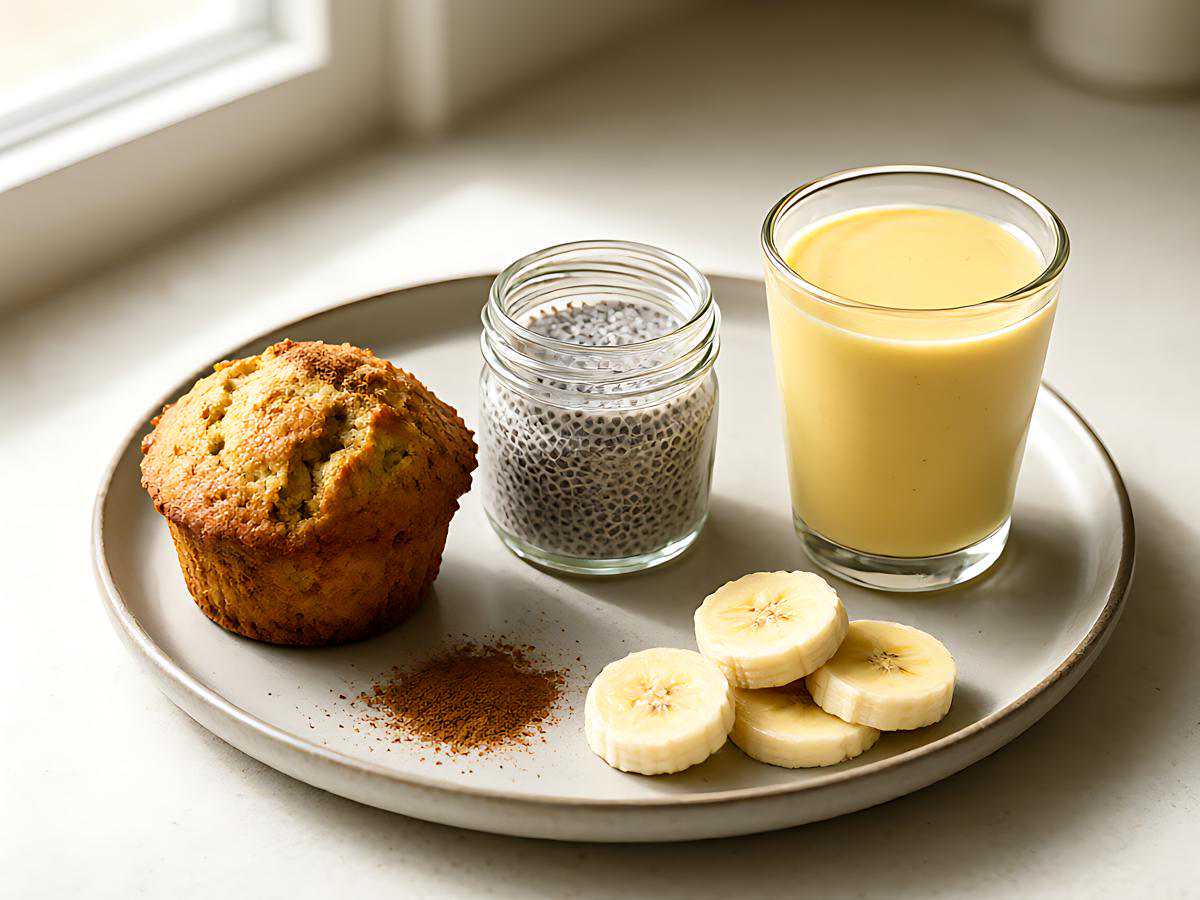
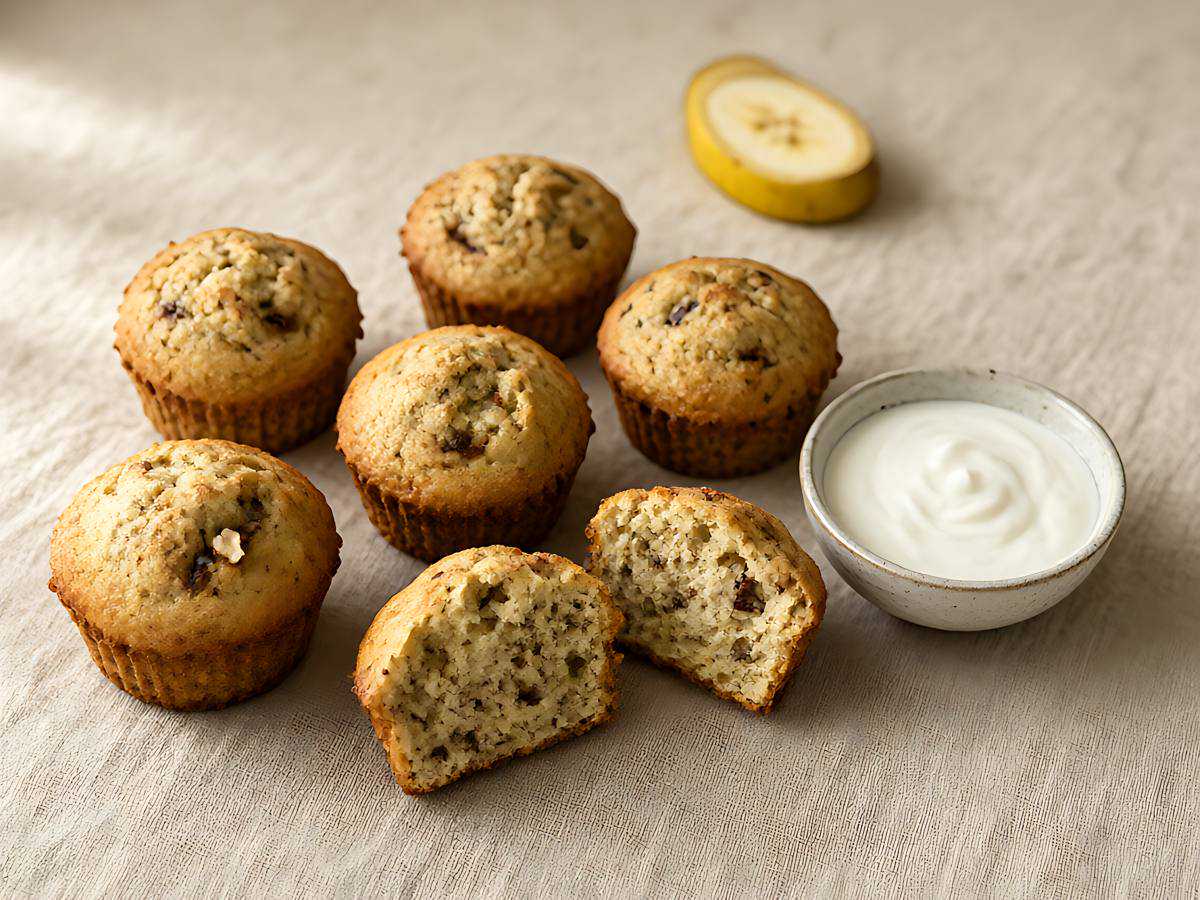
A low carb banana muffin can be a practical way to keep a familiar baked flavor in a smaller portion. The important detail is that banana is not carbohydrate-free. Instead of using several ripe bananas as a traditional muffin recipe might, this version uses a measured amount of banana for aroma and moisture, then relies on banana extract, almond flour, cinnamon, and vanilla to make the flavor feel complete. The result is a soft, nutty muffin that can be packed for breakfast or a snack.
This recipe is written for eight modest muffins. That number is deliberate: individual portions are easier to cool, label, freeze, and pack than a large cake or loaf that gets cut unevenly. If you track carbohydrates for a medical reason, calculate the recipe with the exact brands and quantities you use. A low-carb label is not a guarantee that a food fits every plan, and this guide is not individualized medical advice.
What makes these muffins lower carb
Classic banana muffins often combine multiple bananas with wheat flour, sugar, and a sweet topping. This formula changes each of those parts without trying to make a direct one-for-one copy. Almond flour gives a tender crumb and mild nuttiness. A tablespoon of coconut flour helps absorb liquid. Eggs provide structure, while butter or avocado oil prevents the muffins from becoming dry. A small banana portion supplies real fruit flavor, and banana extract helps the aroma stay noticeable after baking.
The muffins are lightly sweet rather than bakery-sweet. That makes them easier to pair with plain Greek yogurt, cottage cheese, eggs, or an unsweetened drink. If you want a sweeter result, add a measured sweetener that fits your preferences and check its ingredients. A small muffin can easily become a dessert if it is covered with syrup, frosting, or a sweetened spread.
Ingredients for eight muffins
- 1/3 cup mashed ripe banana, approximately 75 to 85 grams
- 1 1/2 cups finely ground blanched almond flour
- 1 tablespoon coconut flour
- 2 large eggs, preferably at room temperature
- 3 tablespoons melted unsalted butter or neutral avocado oil
- 2 tablespoons granulated sweetener that fits your eating plan
- 1 teaspoon unsweetened banana extract, if available
- 1 teaspoon vanilla extract
- 1 teaspoon ground cinnamon
- 1/4 teaspoon nutmeg, optional
- 1 1/2 teaspoons baking powder
- 1/4 teaspoon fine salt
- 1/3 cup chopped walnuts or pecans
- 1 tablespoon hemp hearts, optional
You will need an eight-well muffin tin, paper liners, two bowls, a spatula, and a rack for cooling. A kitchen scale is helpful because banana size varies. Measuring 80 grams of mashed banana is more consistent than choosing “one small banana,” especially when you are comparing batches or recording nutrition.
How to make the muffins
1. Measure the banana
Peel the banana, weigh the portion, and mash it with a fork. Aim for 75 to 85 grams. The mixture should be mostly smooth, with only a few small pieces. Stir in the banana extract and vanilla. The extract supports the flavor; it does not replace the need to account for the real banana in the nutrition calculation.
2. Whisk the dry ingredients
In a medium bowl, combine the almond flour, coconut flour, cinnamon, nutmeg, baking powder, and salt. Break up any clumps. Finely ground almond flour generally produces a more even crumb, while coarse meal creates a heavier, more rustic muffin. If your flour has been chilled, allow it to warm slightly so the melted butter does not firm up as soon as it touches the bowl.
3. Mix the wet ingredients
In a second bowl, whisk the eggs, melted butter or oil, and sweetener. The butter should be warm but not hot. Add the banana mixture and whisk until the liquid looks uniform. Do not add extra milk just because the mixture seems thick; the eggs and banana provide more liquid than they first appear to.
4. Fold and rest
Fold the dry ingredients into the wet ingredients with a spatula. Stop when no dry patches remain. Fold in the nuts and hemp hearts. Rest the batter for five minutes so the coconut flour can absorb moisture. After resting, the batter should be thick but scoopable. If it becomes very stiff, add one tablespoon of unsweetened milk or water, but record that change when calculating the nutrition.
5. Fill the pan
Heat the oven to 350°F or 175°C. Line eight muffin wells and divide the batter evenly, filling each about three-quarters full. Even filling matters because a very full well can brown on top while the center remains underbaked. Smooth the tops with a damp fingertip or the back of a spoon if you want a flatter muffin.
6. Bake and cool
Bake for approximately 20 to 27 minutes. The tops should be lightly golden and set. A toothpick inserted into the center should come out with moist crumbs, not wet batter. Let the muffins cool in the pan for 10 minutes, then move them to a rack. Do not seal them while warm; trapped steam can make the tops damp and the centers gummy.
How to judge the crumb
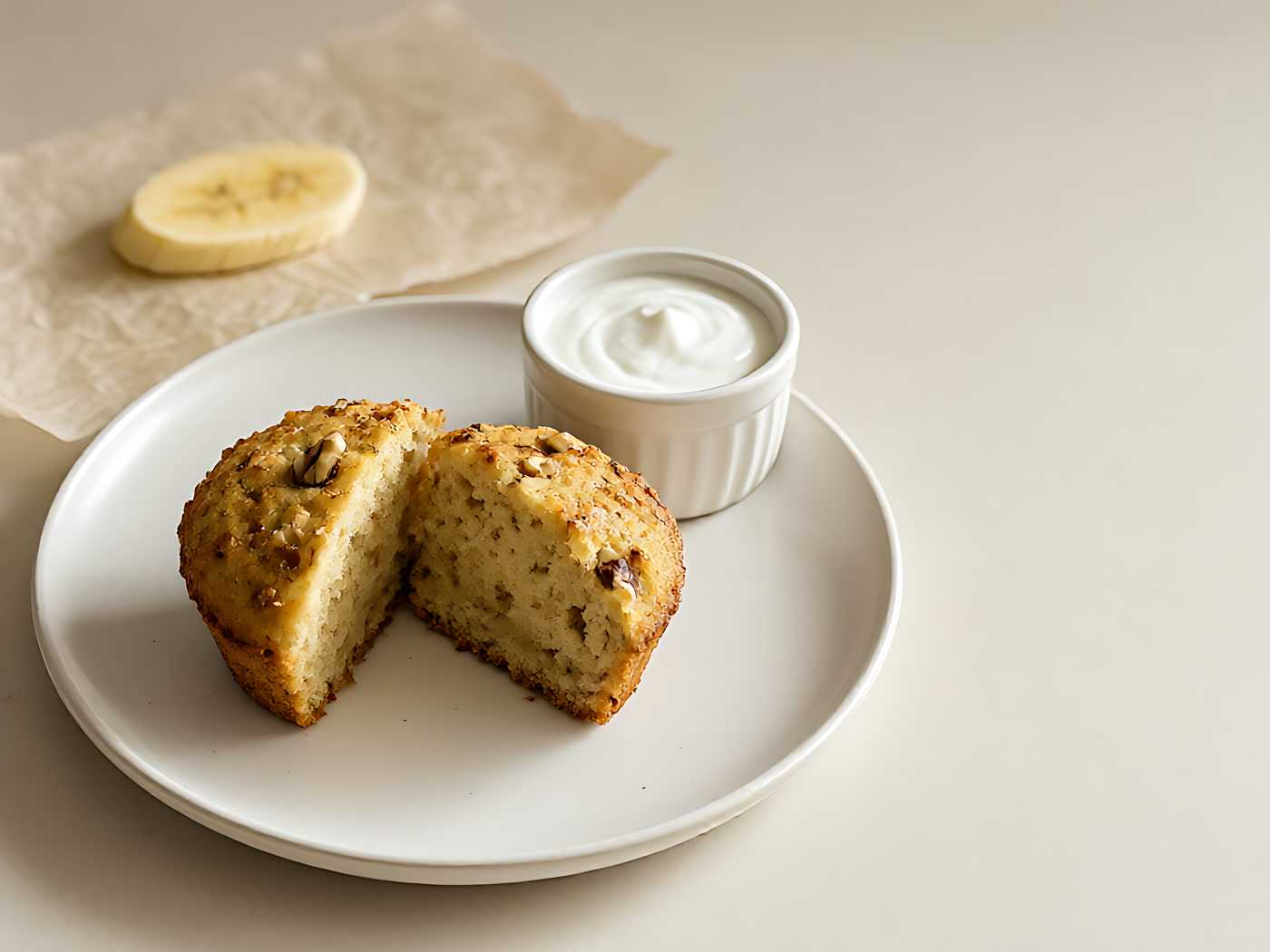
After cooling, the muffin should be soft but should not leave wet batter on your finger. A little moisture is desirable because almond-flour baking can become dry when overbaked. If the center is sticky, the likely causes are too much banana, a cold or inaccurate oven, an overly deep batter layer, or storing the muffins before they cooled. Let the next batch bake until the center is set, and use a thermometer or toothpick rather than relying only on the color of the top.
If the muffins are dry, check whether the almond flour was packed into the measuring cup, whether the eggs were small, or whether the pan stayed in the oven too long. Coconut flour is another common cause. A little extra can absorb enough moisture to turn a tender muffin into a dense one. Do not replace the almond flour with coconut flour cup for cup; the two flours behave very differently.
Flavor variations
Cinnamon pecan
Use pecans instead of walnuts and add a pinch of extra cinnamon. The flavor becomes warmer and richer without requiring a glaze. Measure the pecans because nuts are concentrated foods even when they contain little added sugar.
Lemon banana
Add one teaspoon of finely grated lemon zest and leave out the nutmeg. Lemon zest brightens the banana aroma with almost no extra liquid. Avoid adding lemon juice without changing the recipe because additional liquid can leave the center damp.
Cocoa banana
Replace two tablespoons of almond flour with unsweetened cocoa powder. Cocoa brands vary in bitterness, so adjust the sweetener after tasting the baked muffin rather than guessing. Use plain cocoa, not a sweetened drink mix. If you add sugar-free chocolate chips, count them in the label calculation.
Seeded snack muffin
Replace the nuts with pumpkin seeds and hemp hearts. This gives the muffin a more substantial bite and works well beside a boiled egg or plain yogurt. Seeds still contribute energy and carbohydrate, so add them for flavor and texture, not as an unlimited ingredient.
Nutrition and label checks
Start with the full ingredient list when calculating carbohydrates. Include the banana, almond flour, coconut flour, sweetener, nuts, and any optional toppings. Divide the total by the number of muffins you actually make. If you bake seven large muffins instead of eight smaller ones, the total recipe remains the same but the amount per muffin rises.
Read the sweetener label. Some granulated products contain sugar, maltodextrin, starch, or other fillers. Some sugar alcohols work well for certain people and cause digestive discomfort for others. “No added sugar” does not mean “zero carbohydrate,” so check total carbohydrate and serving size. Banana extract is usually used in a small amount, but formulations vary; choose a product whose ingredient list you understand.
Almond flour also varies by brand. Serving sizes, fiber, and grind can differ, so use the values printed on your bag rather than a generic database entry. If you are comparing these muffins with purchased bread or other baked snacks, our 92nd keto bread guide offers a practical way to review serving sizes, fiber language, and ingredient lists.
Serving and pairing ideas
One muffin may be enough for a light snack, but it may not carry you through a full morning. Pair it with plain Greek yogurt, cottage cheese, a boiled egg, or another protein that fits your plan. You can add cucumber slices or a small portion of berries if those foods work for your target. Pairing does not have to be complicated; it simply keeps a baked item from being the only food in the meal.
For an office container, pack one chilled muffin with a cheese portion and a small cup of plain yogurt. For a travel day, use a rigid container so the muffin does not get crushed, and include a cold pack if it will be away from refrigeration for more than a short period. Moist egg-based muffins should not sit in a warm car all day.
The office snacks guide has more suggestions for workday portions that do not depend on a kitchen. For batch cooking, the meal-prep hub can help you plan cooling, labeling, and freezer portions. Keep two muffins refrigerated for the next couple of days and freeze the rest individually if you do not want the entire batch available at once.
Storage and freezing
Store fully cooled muffins in a sealed container in the refrigerator for up to four days. Place parchment between layers if the tops are delicate. Refrigeration firms the crumb, so warm one gently if you prefer a softer texture. Check the center after reheating because cold, dense muffins can warm unevenly.
To freeze, arrange cooled muffins on a tray until firm, then move them to a labeled freezer bag. Use them within about two months for the best texture. Thaw overnight in the refrigerator or warm gently from frozen. Do not refreeze a muffin that has fully thawed and stayed at room temperature.
Discard muffins with mold, an off smell, a suspicious sticky surface, or any unexpected change. Reheating does not make spoiled food safe. Storage estimates depend on refrigerator temperature and handling, so use the shorter end of the range if the container has been opened frequently.
Common mistakes
- Using a whole banana without recalculating: extra fruit raises the carbohydrate total and can make the center wet. Weigh the portion.
- Replacing almond flour cup for cup: coconut flour absorbs far more liquid and requires a separate formula.
- Skipping the rest: coconut flour may not hydrate evenly, producing a crumb that is dry in some places and wet in others.
- Overfilling the wells: large domes brown quickly while the center remains underbaked.
- Sealing the muffins warm: trapped steam softens the tops and can create gumminess.
- Adding sweet toppings automatically: glaze, syrup, and sweetened nut butter can change the recipe more than the muffin itself.
Keeping the banana flavor clear
Banana flavor is strongly connected to aroma, so extract, vanilla, cinnamon, and browned nuts can make a small fruit portion seem more complete. Toast the nuts lightly before chopping if you want a deeper flavor, but watch them closely because they can burn quickly. Measure the extract instead of pouring freely; too much can taste artificial.
If you want a loaf instead of muffins, bake the same batter in a lined small loaf pan and check the center carefully. The loaf will require more time and is harder to portion consistently. Muffins are often more practical for a snack routine because they cool quickly and can be frozen one at a time. The snack ideas hub includes other portion-friendly formats that can be paired with protein or produce.
Frequently asked questions
Can I omit the banana?
Yes, but the result will be a cinnamon-nut muffin rather than a banana muffin. Keep the banana extract for aroma if you like. Replacing the banana with yogurt or pumpkin puree changes the moisture and nutrition, so adjust the formula rather than treating the swap as neutral.
Can I use coconut flour only?
Not with the same measurements. Coconut flour needs more eggs and liquid and produces a different texture. Choose a recipe designed for coconut flour if you need to avoid almonds. A direct substitution usually creates a dry, dense muffin.
Why did my muffins sink?
The center may not have baked long enough, the baking powder may be old, or the batter may contain extra banana or liquid. Avoid opening the oven repeatedly during the first 18 minutes, and do not remove the pan until the centers look set. Weighing the banana is often the simplest improvement.
Can I add a sugar-free chocolate chip?
You can if the product fits your needs and you have read its label. Sugar-free does not always mean carbohydrate-free, and some sweeteners can cause digestive symptoms. Add a measured amount and include it in the calculation.
Do these muffins fit every keto plan?
No. People have different carbohydrate targets, allergies, digestive responses, and medical considerations. A measured banana portion may fit one plan and not another. Use your own targets and professional guidance when those apply.
This low carb banana muffin recipe is best treated as a measured baked snack rather than an unlimited replacement for a conventional bakery muffin. Weigh the banana, read the labels, use extract for aroma, cool the muffins completely, and store them in portions. Those small habits keep the recipe transparent, repeatable, and easier to fit into a normal week.