Low Carb Alternative to Bread Crumbs: Practical Coatings, Toppings, and Binders
Finding a low carb alternative to bread crumbs is less about choosing one magic ingredient and more about matching the replacement to the job. Bread crumbs can create a crisp coating, bind meatballs, thicken a casserole topping, or add a little texture to a baked dish. A substitute that works beautifully for chicken may be too dry for meatballs, while a crunchy topping may become soft when stored with a creamy vegetable bake.
This guide compares practical alternatives including almond meal, crushed pork rinds, grated Parmesan, ground flax, chia, seed mixtures, and finely chopped nuts. It explains how each option behaves, how to season and cook it, how to read packaged labels, and how to store or transport the finished food. The aim is a usable kitchen system rather than a strict rule. Recipes are general food education, not individualized medical or dietetic advice.
What should a breadcrumb substitute do?
Start by identifying the role of the crumbs. A coating needs to adhere to the food and brown without burning. A binder needs to absorb moisture and help ingredients hold together. A casserole topping needs to add contrast without becoming greasy. A filler in meatballs or patties needs to keep the mixture tender rather than creating a dry center.
Different alternatives behave differently. Almond meal brings fat, fiber, and a mild nutty flavor. Crushed pork rinds create a very crisp coating but can be salty. Parmesan browns quickly and adds savory flavor. Ground flax or chia absorbs water and helps bind a mixture. Seeds and nuts add crunch but can be energy-dense. The best choice depends on the food, the cooking method, and the storage plan.
Use a small test portion when trying a new substitute. Coat one piece of chicken, bake one fritter, or cook one meatball before preparing the entire batch. This reveals whether the coating needs more binder, less salt, a lower temperature, or a different thickness.
Option one: almond meal or almond flour
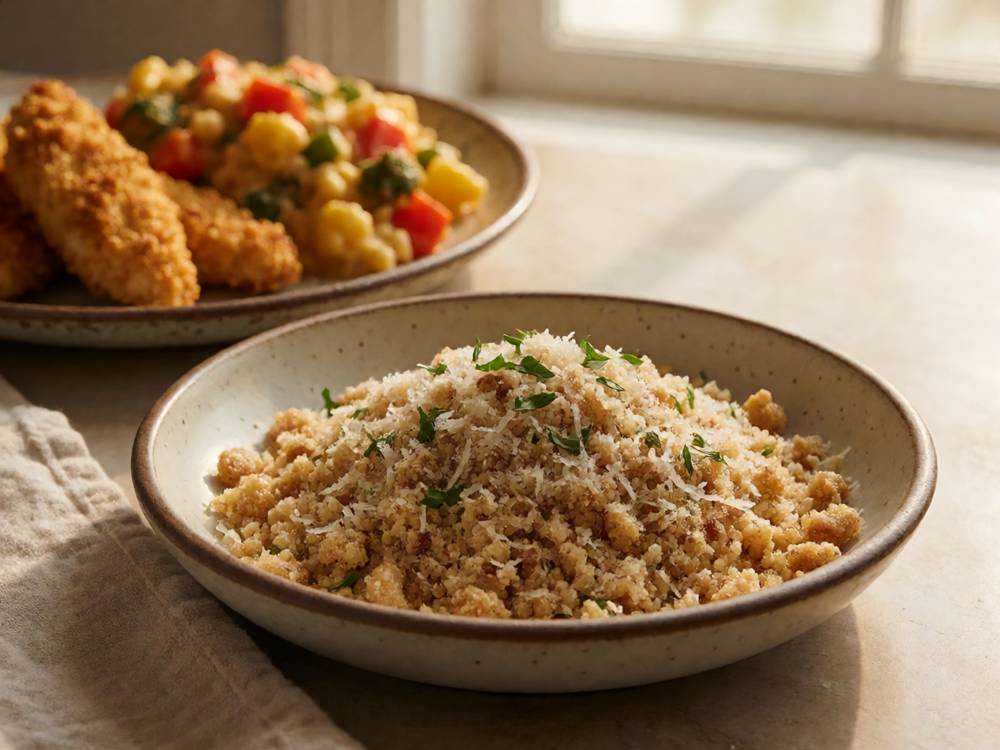
Almond meal is one of the most flexible breadcrumb alternatives. A coarse meal creates a rustic texture, while a fine almond flour gives a smoother coating. Both contain natural fat, so they brown faster than ordinary bread crumbs. Use a moderate oven temperature and watch the edges.
For a basic coating, mix almond meal with garlic powder, paprika, dried herbs, black pepper, and a small amount of salt. Pat the food dry, dip it into egg or another suitable binder, then press on a thin layer of the almond mixture. A thin layer is usually more reliable than a thick one because it cooks evenly and is less likely to fall away.
Almond meal works well for chicken, fish, tofu, zucchini, mushrooms, and vegetable fritters. It can also be stirred into meatballs in a small amount. Because it is concentrated, measure it and account for it as part of the meal. Check the product label for serving size, carbohydrate, fiber, protein, calories, sodium, and tree-nut allergen information.
Option two: crushed pork rinds
Crushed pork rinds create a crisp, light coating and are often used when a recipe needs a breaded texture. Choose a plain product when possible. Flavored versions may contain added sugar, starches, or a large amount of sodium. Crush them into a fine meal for an even coating, or leave some larger pieces for extra crunch.
Pork rind crumbs work particularly well for chicken tenders, fish, pork chops, and cheese-filled vegetables. They can become oily if too much is applied or if the food is fried in a large amount of fat. Use a rack for baking so hot air can circulate, and let the finished food rest briefly before serving.
Salt is the main consideration. The pork rinds may already be seasoned, and the binder or protein may contain sodium as well. Taste the coating mixture before adding more salt. If the finished food is going into a casserole with cheese or sauce, reduce seasoning in the crumbs.
Option three: grated Parmesan and cheese mixtures
Finely grated Parmesan can create a savory browned surface. It works best as part of a mixture rather than as the only coating because cheese can melt and spread. Combine Parmesan with almond meal, herbs, or crushed seeds. Use a thin layer and moderate heat.
Cheese coatings suit chicken, eggplant, zucchini, mushrooms, and cauliflower. They can also top a small casserole. Keep the topping exposed to dry heat so it develops color. If it is covered with sauce, it may become soft rather than crisp.
Cheese varies in moisture and sodium. Finely grated hard cheese usually behaves differently from a moist shredded blend. Check the product label and reduce salt when necessary. If you are using a dairy-free alternative, test a small portion because melting and browning can differ considerably.
Option four: ground flax and chia
Ground flax and chia are better known as binders than as crisp coatings. They absorb liquid and can help hold together meatballs, vegetable patties, fritters, and small loaves. Mix a small amount with water and let it stand briefly before combining it with the food. This creates a gel that helps the mixture stay together.
Flax has a mild earthy flavor and can work with chicken patties, salmon cakes, or vegetable fritters. Chia can create more visible texture and may feel slightly firmer. Use a modest amount because too much can make the center gummy or dry. If the mixture becomes stiff after resting, add liquid by the teaspoon.
These binders are useful when the goal is structure rather than crunch. If you want a crisp surface, coat the outside with almond meal or seeds after the flax or chia has helped the interior hold together.
Option five: seeds and chopped nuts
Ground sunflower seeds, pumpkin seeds, sesame seeds, walnuts, and pecans can add texture and flavor. A mixture of finely chopped nuts and seeds works well as a topping for roasted vegetables or a coating for chicken. Toasting increases flavor but also increases the risk of burning, so use moderate heat.
Seeds and nuts are energy-dense. A topping can be delicious while still needing a visible portion. Measure before sprinkling rather than returning to the bag for repeated handfuls. If you need a lower-cost option, sunflower seeds can provide crunch without the price of some specialty nuts.
Nut and seed toppings can be less stable in a lunch container because steam softens them. Pack the topping separately or add it after reheating. Store the mixture sealed and away from heat because the oils can become stale.
Option six: pork rind and almond meal blend
A blend can combine the crispness of pork rinds with the tenderness of almond meal. Use equal parts crushed plain pork rinds and almond meal as a starting point. Add garlic powder, paprika, pepper, and herbs. The pork rind brings crunch, while the almond meal softens the flavor and helps the coating look more like a traditional crumb.
Use the blend on chicken, fish, tofu, or roasted vegetables. Pat food dry, use a thin binder, and press the coating on firmly. Bake on a rack or pan-fry in a small amount of oil. If the coating is browning too quickly, reduce the heat or cover the protein loosely while it finishes cooking.
This blend may be high in sodium depending on the pork rind product. Check the package and avoid adding salt automatically. If you are preparing food for several people, label the mixture so anyone with a pork or dairy restriction knows what it contains.
Choosing the right alternative for each job
For chicken or fish: use almond meal, pork rind crumbs, Parmesan, or a blend. Choose a coating that matches the cooking temperature and the desired crunch.
For meatballs: use a small amount of almond meal, ground flax, chia, or grated Parmesan. The binder should support tenderness, not create a thick dry center.
For vegetable fritters: use almond meal or flax after removing excess water from the vegetables. Make small fritters so the center cooks before the outside becomes dark.
For a casserole topping: use almond meal, Parmesan, seeds, or chopped nuts. Add the topping near the end if the casserole has a long cooking time.
For a crisp snack: use a thin almond meal cracker, toasted seed mix, or baked pork rind crumb mixture. Store it away from moisture and portion it before eating.
Recipe: almond meal chicken tenders
Slice chicken into even strips and pat them dry. Mix almond meal with paprika, garlic powder, pepper, parsley, and a small amount of salt. Dip each strip into beaten egg, let the excess drip away, and press the strip into the almond mixture. Place the pieces on a rack over a lined baking sheet.
Bake at moderate heat until the coating is golden and the chicken reaches a safe internal temperature. Turn the pieces once if needed. Let them rest before serving. The rack helps air circulate and keeps the underside from becoming wet. Serve with cucumber, greens, roasted vegetables, or a measured dip.
For meal prep, store the tenders away from sauces. Reheat them in an oven, toaster oven, or air fryer to restore texture. A microwave is convenient but may soften the coating. If the food is traveling, cool it promptly and use an insulated container with an ice pack.
Recipe: low carb vegetable crumble
Roast cauliflower, broccoli, zucchini, or mushrooms until excess moisture has evaporated. Mix almond meal with Parmesan, herbs, pepper, and a small amount of butter or olive oil. Sprinkle it over the vegetables during the final part of roasting. The topping should become golden without burning.
This method works better than covering the vegetables at the beginning because the crumb mixture stays exposed to dry heat. Add fresh herbs or lemon zest after cooking. If the dish will be stored, keep a little topping separate and add it after reheating for better texture.
For a richer meal, add chicken, eggs, tofu, or another suitable protein. The crumb alternative is a contrast element, not the entire meal. Use a visible portion and account for the fat from the cheese, nuts, or oil.
Recipe: flax-bound salmon cakes
Mix cooked salmon with an egg, ground flax, herbs, lemon zest, and pepper. Let the mixture rest for several minutes so the flax hydrates. Form small cakes and chill them briefly before cooking. Pan-cook them in a lightly oiled skillet until the outside is golden and the center is hot.
If the mixture is too wet, add flax one teaspoon at a time. If it is too firm, add yogurt or another suitable moist ingredient. Make small cakes because they are easier to turn. Serve with greens, cucumber, or a lemon yogurt sauce. Pack the cakes and sauce separately if you are taking them to work.
Recipe: almond meal meatballs
Combine ground turkey or chicken with an egg, almond meal, herbs, pepper, and a small amount of grated onion if tolerated. Let the mixture rest before forming even balls. Bake or pan-cook until the centers are fully done. The almond meal should be a supporting binder, not the main volume.
Serve the meatballs with roasted vegetables, zucchini, cauliflower, or a small amount of sauce. If you use a packaged sauce, check the added sugar and sodium. Leftover meatballs can become a lunch bowl or a portable snack, but keep them chilled and follow safe storage guidance.
Portion, storage, and portability
Crumb alternatives are concentrated ingredients. Almonds, cheese, seeds, and pork rinds can add substantial fat, sodium, and energy. Portion the coating mixture before cooking and serve the finished food with vegetables or another anchor. A crisp coating is a texture choice, not a guarantee of a particular health result.
Cool cooked foods promptly in shallow containers. Store coatings and toppings separately from wet food when possible. For office or travel, use an insulated bag with an ice pack for meat, fish, eggs, dairy, and prepared sauces. Keep dry crackers or toasted toppings in a sealed container away from steam.
A practical prep plan might include one batch of chicken tenders, one vegetable roast, and one flax-bound patty mixture. Use different seasonings so the food does not feel repetitive. For a larger protein system, see the meal-prep chicken guide.
Label reading and product disclosures
Packaged crumb alternatives can contain starches, added sugar, high sodium, or flavorings that are not obvious from the front label. Check the ingredient list and serving size. “Keto” or “low carb” language describes a marketing position, not a complete nutrition assessment.
Plain pork rinds may be high in sodium. Seasoned varieties may contain sugar or starch. Parmesan can vary in salt and moisture. Almond meal may be sold in a blend. Seed mixes can include sweetened ingredients. Use the current package as the authority because product formulas can change.
If you are choosing between a homemade coating and a packaged product, compare preparation time, cost, texture, storage, and the ingredients you actually want to eat. For another convenience-food label framework, read the keto bread label guide.
Troubleshooting
The coating falls off. The food may have been wet, the binder may have been too thin, or the coating may not have been pressed firmly. Pat the food dry and let the coated pieces rest for a few minutes before cooking.
The coating burns. Lower the heat, use a rack, or cover the food loosely while the center cooks. Almond meal and Parmesan brown faster than ordinary bread crumbs.
The coating is greasy. Use less added oil and avoid crowding the pan. Place baked food on a rack so excess fat can drain.
The meatballs are dry. Reduce the amount of almond meal or flax, add a moist binder, and avoid overcooking. Resting the mixture helps the binder hydrate.
The topping becomes soft. Store it separately from the moist dish and add it after reheating. A dry oven or toaster oven can restore some texture.
Frequently asked questions
What is the best low carb alternative to bread crumbs?
It depends on the job. Almond meal is flexible, pork rind crumbs are crisp, Parmesan is savory, and flax or chia are useful binders. A blend can combine texture and flavor.
Can almond flour replace bread crumbs in meatballs?
Yes, in a modest amount. Let the mixture rest and test one meatball before cooking the full batch. Too much almond flour can make the center dense.
Are pork rind crumbs suitable for everyone?
No. They may not fit a person’s dietary preferences, sodium needs, allergy concerns, or religious restrictions. Read the package and choose another alternative when necessary.
How do I keep a low carb coating crisp?
Pat the food dry, use a thin coating, cook on a rack or in a lightly oiled pan, avoid covering it while hot, and keep sauces separate until serving.
Can I make a crumb alternative in advance?
Yes. Store a dry mixture in a sealed container away from heat and moisture. Label the ingredients and date. Use fresh nuts and seeds because their oils can become stale.
Related reading
For more snack and coating ideas, visit the Snack ideas hub. For creamy vegetable and protein pairings, read low carb recipes with Alfredo sauce. For a packed option using coated protein, continue to low carb lunch planning.
The best low carb alternative to bread crumbs is the one that matches the texture, cooking method, storage conditions, and dietary needs of the meal. Start with a small test, season thoughtfully, check the current label, and use a visible portion. With that approach, almond meal, seeds, Parmesan, flax, and crisp pork rind crumbs can all become useful tools rather than one-size-fits-all substitutes.
Editorial note: This article is general food education and is not individualized medical, dietetic, or treatment advice. Dietary needs vary. Seek qualified professional guidance for allergies, chronic conditions, medication-related questions, pregnancy, severe digestive symptoms, or eating concerns.