Low Carb Recipes with Alfredo Sauce: 7 Creamy Ways to Build a Balanced Plate
Low carb recipes with Alfredo sauce can be much more useful than a single substitute for traditional pasta. The same creamy sauce can bring together roasted vegetables, chicken, seafood, mushrooms, or a carefully chosen noodle alternative. The key is to build the dish around a clear base, a satisfying protein or vegetable anchor, and a sauce portion that supports the meal without becoming the entire meal. This guide shares seven practical combinations, explains how to keep the sauce smooth, and covers storage, portability, label reading, and honest product choices.
The recipes are designed for ordinary kitchens and flexible schedules. You can make the sauce on the stovetop, use leftovers from a batch of protein, or assemble a quick bowl from frozen vegetables and a refrigerated ingredient. The ingredients can be adapted for dairy preferences, allergies, budget, and taste. Since people have different health needs, this is general food education rather than individualized medical or dietetic advice. Check current package labels and use professional guidance when a medical condition or allergy affects your choices.
What counts as a practical low carb Alfredo recipe?
A practical recipe solves more than the carbohydrate question. It needs a base that holds sauce, a flavor profile that stays enjoyable after several bites, a portion that can be recognized, and a preparation method that matches the time you actually have. A dish that looks good on a recipe card but becomes watery in a lunch container is not a dependable weekday option. A rich sauce paired with no protein may also leave the meal less satisfying than expected.
Start with a simple plate formula: one low carb base, one protein or substantial vegetable anchor, one measured sauce portion, and one fresh or crisp finishing element. Zucchini, cauliflower, broccoli, spaghetti squash, mushrooms, hearts of palm noodles, and shirataki noodles all work differently. Chicken, shrimp, salmon, eggs, tofu, and lean beef provide different textures and cooking times. Fresh herbs, lemon, pepper, roasted garlic, and toasted seeds can keep the bowl interesting without requiring a completely new sauce.
Low carb does not automatically mean low calorie, high protein, or appropriate for every person. Butter, cream, cheese, nuts, and oils can all fit a balanced routine, but they are concentrated ingredients. Decide the role of Alfredo before you cook: a light coating for vegetables, a richer component in a planned dinner, or a sauce for a small make-ahead portion. That decision makes it easier to adjust the amount without turning the recipe into an all-or-nothing rule.
A dependable Alfredo sauce base
For four modest servings, warm two tablespoons of butter or olive oil in a wide pan. Add two minced garlic cloves and cook until fragrant, then pour in one cup of cream or a suitable unsweetened alternative. If you want a thicker sauce, whisk in four ounces of softened cream cheese. Keep the heat moderate and avoid a hard boil. When the mixture looks smooth, lower the heat and add three quarters of a cup of finely grated Parmesan a little at a time.
The order matters. Garlic can become bitter when browned too aggressively, dairy can separate when boiled, and cheese can turn grainy when exposed to high heat. Whisk as the Parmesan melts. If the sauce becomes too thick, add warm water or unsalted broth one tablespoon at a time. If it is too loose, let it reduce briefly over low heat. Taste only after the cheese is mixed in because Parmesan already brings salt.
For a lighter texture, use part blended cauliflower or pureed cottage cheese if those ingredients fit your preferences. For a dairy-free version, use an appropriate unsweetened alternative and a seasoning blend that supplies savory depth. Every substitution changes flavor, thickness, carbohydrate content, or allergen information, so read the label and test a small batch before preparing a full week of meals.
Recipe one: chicken, broccoli, and Alfredo
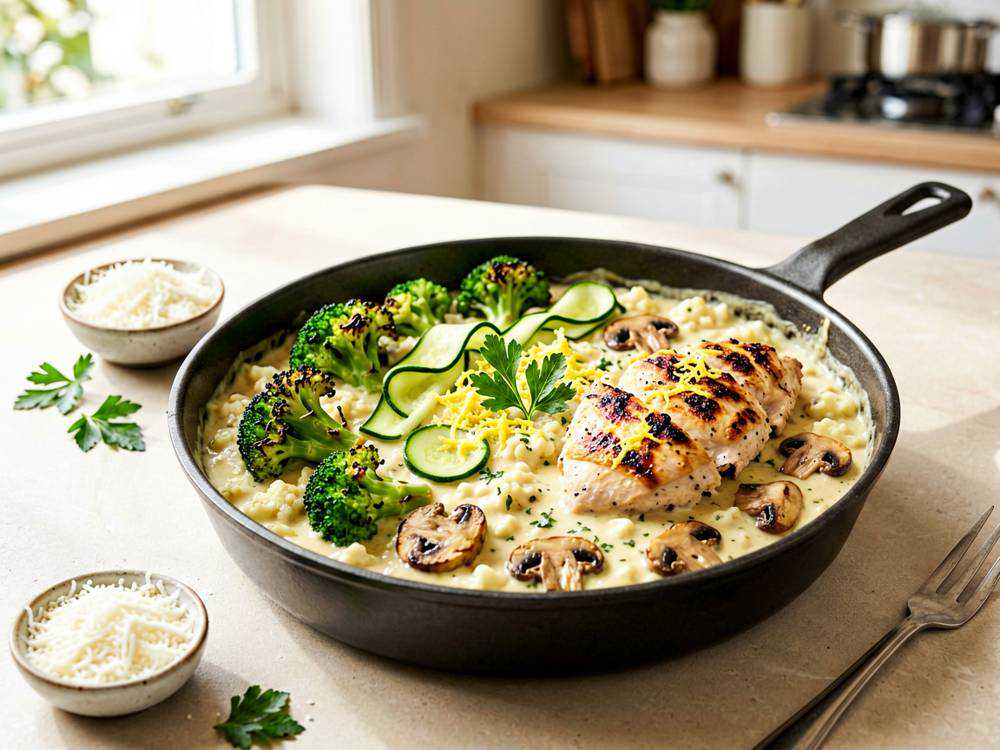
Chicken and broccoli are a dependable starting point because they hold their texture and reheat better than many delicate ingredients. Cut boneless chicken into even pieces, season with pepper, garlic powder, and a modest amount of salt, and cook until safely done. Remove it from the pan and rest it before slicing. Steam or roast broccoli separately. Roasting gives the florets browned edges and prevents the sauce from becoming diluted by excess water.
Prepare the sauce in the chicken pan so it can pick up the flavorful browned bits. Add the broccoli and chicken only after the sauce is smooth. If you plan to pack the meal, keep a portion of sauce in a separate small container. Add it after reheating so the broccoli stays firmer. Finish with parsley, lemon zest, or black pepper. This version is simple enough for a weeknight but structured enough to serve as a repeatable meal-prep base.
Recipe two: shrimp Alfredo with zucchini ribbons
Shrimp brings a quick-cooking protein to the table. Pat the shrimp dry, season lightly, and cook in butter or olive oil until opaque. Remove it as soon as it is done. Use the same pan for the sauce, but lower the heat before adding dairy. Zucchini ribbons need only a brief sauté. The goal is to warm them while preserving some bite; long cooking releases water and can make the dish soupy.
Fold the shrimp into the finished sauce at the last moment. Add lemon zest, parsley, or chili flakes for contrast. Because shrimp can become rubbery after repeated reheating, this recipe is best prepared for a same-day dinner or a next-day lunch. For transport, cool it promptly, use a leak-resistant container, and keep it chilled with an ice pack. Never stretch seafood or dairy storage beyond current food-safety guidance.
Recipe three: roasted cauliflower and mushroom Alfredo
Roasted cauliflower and mushrooms create a hearty vegetable combination without depending on a noodle substitute. Cut the cauliflower into similar florets and slice the mushrooms. Roast the cauliflower first because it usually needs more time. Add the mushrooms later or cook them in a separate pan so their water can evaporate and their edges can brown.
Pour a modest amount of Alfredo over the vegetables just before serving. Add a boiled egg, chicken, tofu, or another suitable anchor if you want a more substantial bowl. Toasted pumpkin seeds can add crunch, but measure them before adding because seeds are energy-dense. A pinch of smoked paprika or fresh thyme can make the dish taste deeper without adding a second heavy sauce.
For leftovers, store the vegetables and sauce separately. Reheat the cauliflower and mushrooms in an oven, toaster oven, or air fryer when possible, then warm the sauce gently with a teaspoon of water. This two-part approach takes slightly more organization but produces a much better texture than reheating everything in one sealed container.
Recipe four: salmon, spinach, and spaghetti squash
Spaghetti squash is useful when you want strands without using wheat pasta. Roast the squash until the flesh separates easily, then let it cool enough to handle. Drain excess moisture before adding sauce. Bake or pan-cook salmon with pepper, herbs, and lemon zest. Avoid adding too much salt before the sauce is complete because Parmesan may already supply enough.
Wilt spinach in the warm pan and fold it through a small amount of Alfredo. Place the salmon on top of the squash and spinach rather than breaking the fish into the sauce. This preserves the texture and makes the portion easier to see. If the dish tastes heavy, add lemon zest or chopped herbs rather than automatically adding more salt.
Keep the salmon, squash, greens, and sauce in separate sections when packing. Reheat gently and add the sauce only after the base is warm. Fish dries quickly under high heat, so shorter reheating is usually better. If you cannot keep the meal cold, choose a shelf-stable or freshly purchased alternative rather than carrying a perishable cream dish without proper refrigeration.
Recipe five: turkey meatballs with creamy cauliflower
Turkey meatballs make the sauce feel like part of a complete dinner. Combine ground turkey with pepper, herbs, grated Parmesan, and an egg if needed for binding. Form small meatballs so they cook evenly. Bake or pan-cook them until fully done. Meanwhile, steam cauliflower and blend or mash part of it with a spoonful of Alfredo. Keep some florets whole so the bowl has both creaminess and texture.
Serve the meatballs over the cauliflower mixture and spoon a smaller amount of sauce around them. Add chopped parsley and a little lemon zest. This combination is easy to portion because the number of meatballs and the volume of cauliflower create visible boundaries. It also works well for a family-style meal in which different people want different amounts of sauce.
If you buy prepared meatballs, read the full ingredient list and carbohydrate information. Breadcrumbs, starches, sweeteners, and sauces can vary by brand. A product that seems similar on the front of the package may have a very different serving size or sodium level. Honest label reading is part of the recipe, not an optional detail.
Recipe six: chicken Alfredo lettuce cups
Lettuce cups turn Alfredo ingredients into a lighter, portable-style meal, although the sauce should be used carefully. Cook diced chicken with mushrooms or peppers, then add just enough sauce to bind the filling. Let it cool slightly before spooning it into sturdy lettuce leaves. Romaine, butter lettuce, or another crisp variety can work, but choose leaves that are large enough to hold the filling without tearing.
Keep the lettuce and warm filling separate until you are ready to eat. Add chopped herbs, cucumber, or a small amount of toasted seeds for contrast. This option is better for a short commute or an office where refrigeration is available than for a long trip. If the filling is too wet, the leaves will soften quickly. Drain vegetables and use a thinner layer of sauce to improve portability.
For a more filling version, add a side of roasted cauliflower or a portion of another vegetable. The goal is not to turn the lettuce cup into a zero-carbohydrate challenge. It is to create a meal with a clear portion, useful texture, and less mess than a large saucy bowl.
Recipe seven: creamy Alfredo vegetable skillet
A vegetable skillet is a flexible way to use what is already in the refrigerator. Choose two or three vegetables with different textures, such as broccoli, zucchini, mushrooms, spinach, green beans, or roasted peppers. Cook the vegetables in stages instead of crowding the pan. Start with the firmest ingredient, add mushrooms when there is room for their moisture to evaporate, and add spinach at the end.
Lower the heat before stirring in Alfredo sauce. Add cooked chicken, shrimp, tofu, or eggs if you want more protein. Finish with pepper and herbs. This recipe is not meant to disguise every vegetable as pasta; it is meant to make a practical collection of ingredients feel like one meal. If the vegetables release water, serve the sauce on top rather than simmering everything together.
Because the ingredients are flexible, this skillet is useful for reducing food waste. Use vegetables that are still fresh and safe, but do not keep cooked leftovers beyond their appropriate storage window. Label containers with the date and cool food promptly in shallow containers. A sauce that is easy to make is only helpful when the full storage routine is safe and realistic.
How to choose a base and portion
Zucchini noodles are fast but watery, so pat them dry and cook briefly. Cauliflower is sturdy when roasted and works well in a lunch container. Spaghetti squash provides strands but may need draining. Hearts of palm noodles and shirataki noodles have distinct textures and should be prepared according to the package directions. Mushrooms are flavorful and satisfying but can shrink significantly, so cook enough to create a visible portion.
Use the same portion check for every recipe. Can you see the protein or main anchor? Is there enough vegetable volume to make the bowl feel like a meal? Is the sauce coating the food rather than filling most of the container? Do you know what happens to the leftovers? The answers will differ for different appetites and schedules, but the questions keep the recipe connected to real use.
Pairing Alfredo with a high-fiber vegetable can improve texture and make the dish less dependent on sauce. A protein anchor can make a small bowl more satisfying. A crisp finishing element can slow the pace of eating because it gives the meal another sensory cue. None of these features guarantees a particular weight outcome; they are simply practical design choices.
Storage and meal-prep strategy
Prepare a batch of protein, two vegetable bases, and one sauce. Store them in separate containers so you can create different combinations. Chicken can pair with broccoli one day and zucchini the next. Roasted cauliflower can be served with mushrooms, salmon, or meatballs. The sauce can be thinned for one meal and kept thicker for another.
Cool cooked foods promptly and refrigerate them in shallow containers. Keep cream sauces cold and transport them in an insulated bag with an ice pack when needed. Reheat slowly over low heat and add warm water or unsalted broth if the sauce has tightened. Do not microwave a large sealed container without venting it, and stop heating when the food is hot enough to serve rather than continuing until the sauce breaks.
For a broader batch-cooking system, see these meal-prep chicken ideas. The same prepared protein can serve a creamy Alfredo bowl, a salad, or a portable lunch without requiring a new recipe each day.
Portability and product-label notes
A creamy meal needs a container that seals well. Pack sauce separately when the base is likely to soften, and keep crunchy toppings in a dry compartment. For office lunches, plan where the meal will be refrigerated and reheated. For road trips, use a cooler and ice pack or choose a food that does not require refrigeration. A food plan fails when its storage requirements are ignored, even if the ingredient list looks ideal.
If you use a jarred Alfredo sauce, check the serving size, total carbohydrate, added sugar, sodium, saturated fat, dairy allergens, and preservatives. The front label may highlight “low carb” while the actual serving is smaller than the amount you would normally use. Read the current package every time a product changes. For a packaged-food comparison mindset, use this practical label and use guide as a related example of checking a convenience product in context.
Product disclosures should stay honest. A sauce can be convenient, but convenience does not make it nutritionally complete. A low carbohydrate product can still be high in sodium or rich in calories. A dairy-free product can still contain other allergens or added starches. Explain what the product does and what it does not do, then let the reader decide whether it fits the occasion.
Troubleshooting the sauce
Grainy sauce: lower the heat and add finely grated cheese slowly. High heat and large cheese shreds are common causes. If the sauce has already become grainy, remove it from the burner and whisk in a spoonful of warm liquid.
Separated sauce: stop boiling and whisk in warm water a teaspoon at a time. Next time, keep the pan at a gentle heat and add Parmesan after the dairy is warm but not bubbling aggressively.
Watery vegetables: use dry heat for mushrooms and cauliflower, pat zucchini dry, and avoid covering vegetables immediately after cooking. Combine the sauce at serving instead of letting it sit over hot vegetables for a long time.
Heavy flavor: add lemon zest, herbs, pepper, or a small amount of acidity. More salt is not always the answer. Taste the sauce with the base because vegetables and proteins change how seasoning is perceived.
Thick leftovers: warm slowly and stir in a little water or broth. Cream sauces naturally tighten in the refrigerator. Do not dilute the whole batch if only one serving needs adjustment.
Make the recipes work in a real week
A useful weekly plan might start with chicken and broccoli, continue with shrimp and zucchini on a day when you can eat seafood fresh, use roasted cauliflower and mushrooms for a meatless meal, and finish with salmon and spaghetti squash. You do not need seven different sauces. One dependable base and several combinations can create variety without a complicated shopping list.
Keep a minimum version for difficult days: frozen broccoli or cauliflower, cooked chicken, grated Parmesan, and a small amount of cream or a suitable alternative. The quick meal can be assembled in one pan and finished with herbs. It may be less elaborate than the full recipe, but it maintains the structure. Consistency comes from a plan that can survive low energy, busy workdays, and unexpected schedule changes.
If you need a portable meal with fewer moving parts, compare these low carb lunch planning ideas. They can help you decide which Alfredo combinations are stable enough for a container and which are better served immediately.
Frequently asked questions
Are all Alfredo recipes low carb?
No. Flour-based thickeners, regular pasta, sweetened sauces, and some prepared products can add substantial carbohydrate. Check the complete ingredient list and serving size. A homemade sauce can still be rich, so evaluate the whole plate rather than the carbohydrate number alone.
Which vegetables work best with Alfredo sauce?
Broccoli, cauliflower, mushrooms, zucchini, spinach, green beans, roasted peppers, and spaghetti squash are adaptable choices. Use roasted or well-drained vegetables when you want to avoid a watery sauce.
Can I use jarred sauce?
Yes, if it fits your needs and you check the current label. Use it as a component rather than assuming it completes the meal. Add a clear protein and vegetables, and account for the product’s sodium, fat, allergens, and serving size.
How do I make the meal less heavy?
Use more vegetables, a smaller sauce portion, fresh herbs, lemon zest, and a protein or base with texture. You can also thin the sauce with warm water or unsalted broth. A blended vegetable sauce can provide body while changing the flavor from a traditional cream sauce.
Can I freeze the finished dish?
Cream sauces can separate after freezing and thawing. Test a small portion first, thaw it safely in the refrigerator, and reheat gently. For better texture, freeze or refrigerate the protein and vegetables separately and make a fresh small sauce when possible.
Related reading
Visit the Snack ideas hub for more practical combinations that fit structured eating occasions. If you are adapting bread or wraps as a companion to creamy meals, use the keto bread label guide to evaluate the current package rather than relying only on front-of-pack claims.
Low carb recipes with Alfredo sauce are most useful when they are creamy enough to enjoy, structured enough to satisfy, and practical enough to store safely. Start with one sauce, choose a base you actually like, add a clear anchor, and adjust the portion to the occasion. That approach creates a flexible meal system instead of a single rigid recipe.
Editorial note: This article is general food education and is not individualized medical, dietetic, or treatment advice. Dietary needs vary. Seek qualified professional guidance for allergies, chronic conditions, medication-related questions, pregnancy, severe digestive symptoms, or eating concerns.