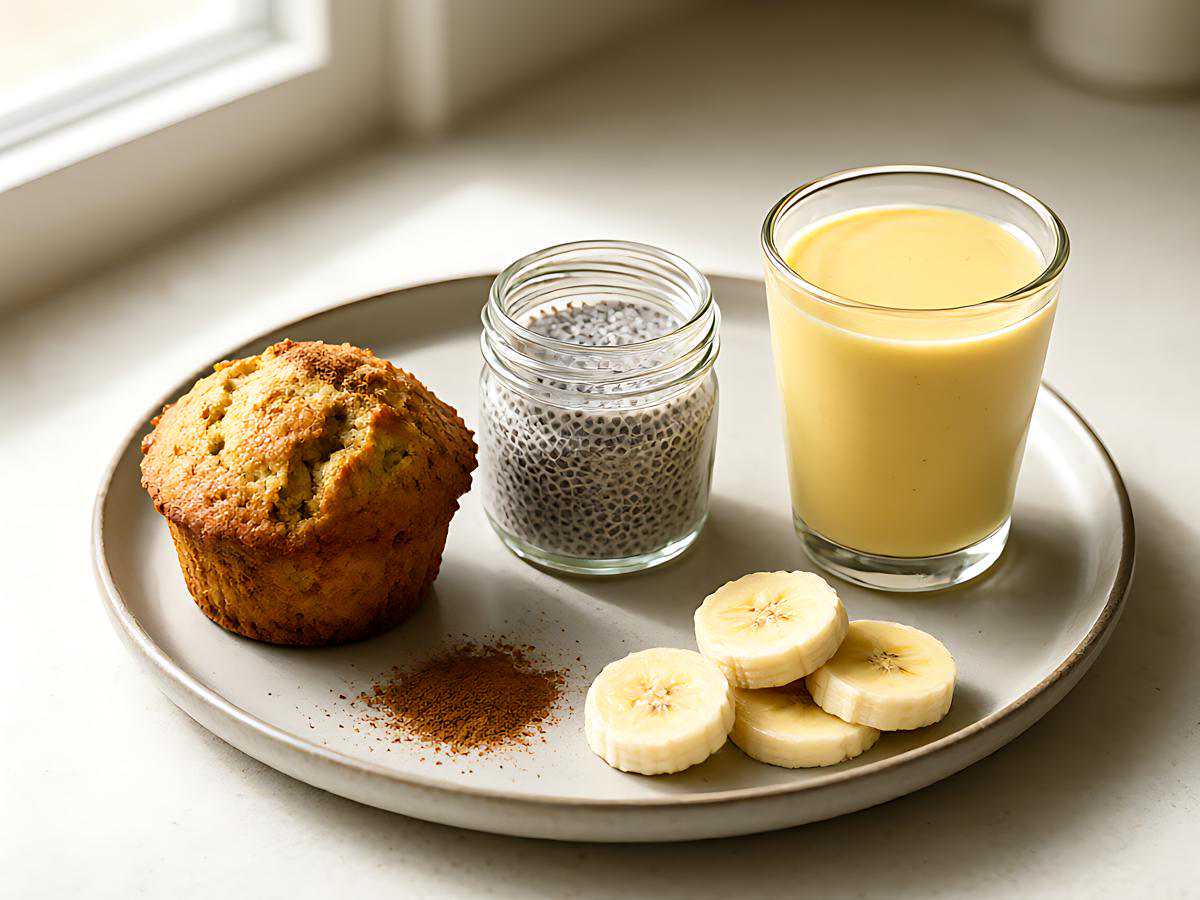
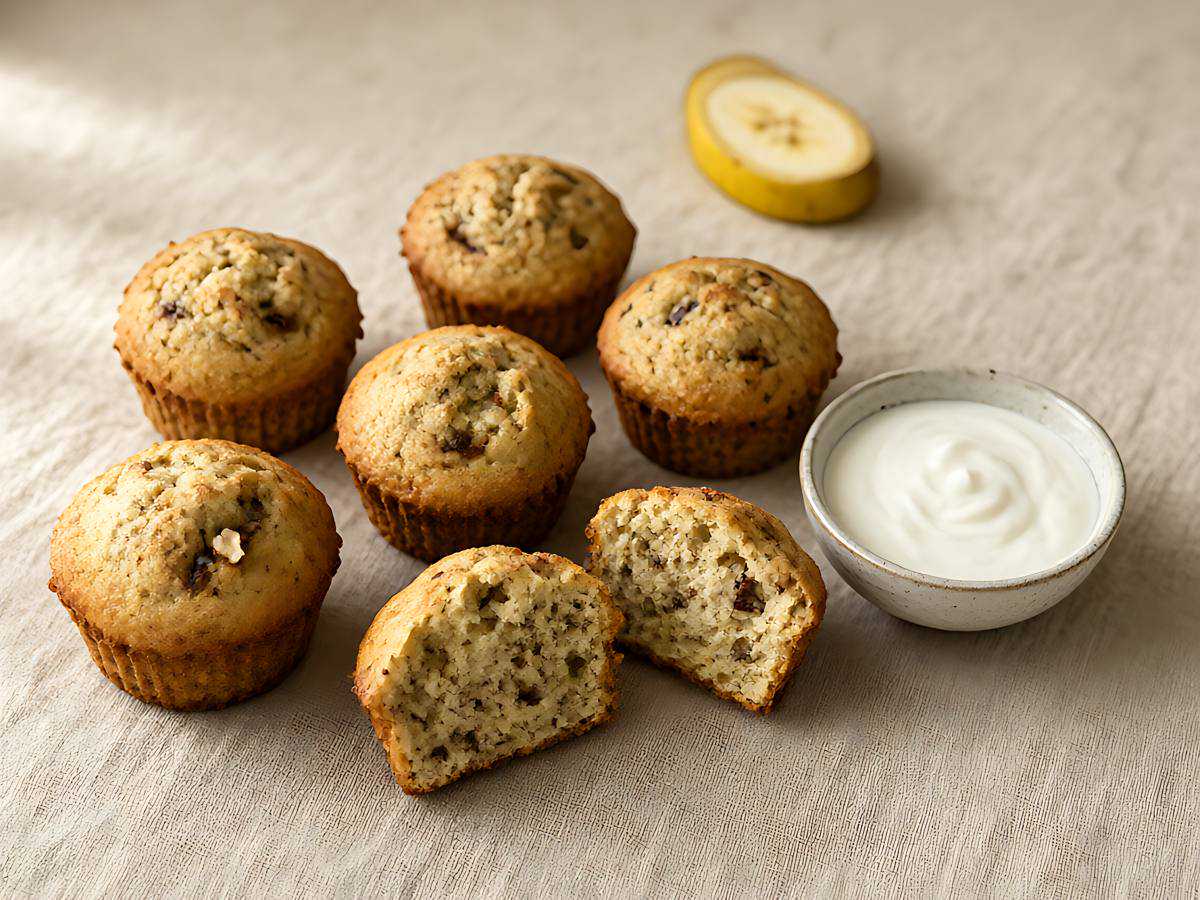
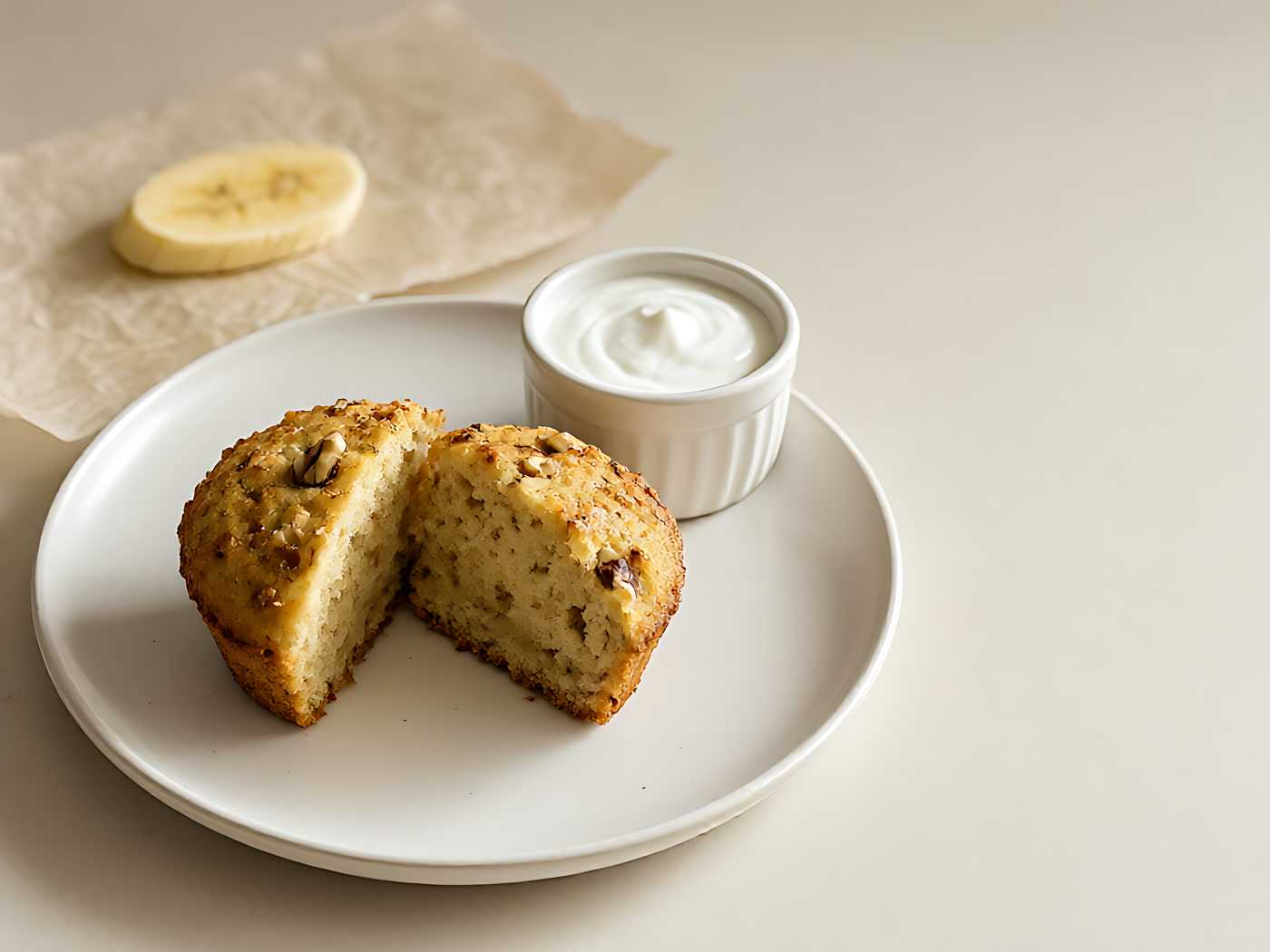
Low carb banana bread muffins are useful when you want a familiar baked flavor in a small, portionable format, but the phrase “banana bread” needs a little honesty. A ripe banana contributes natural sugar and carbohydrate, so a lower-carb muffin should use a measured amount rather than several bananas. The rest of the flavor can come from banana extract, cinnamon, vanilla, and toasted nuts. This recipe makes eight modest muffins with a tender almond-flour crumb, a lightly browned top, and enough structure to pack for breakfast or a snack.
The goal is not to make a traditional bakery muffin disappear under a keto label. The goal is to give you a workable formula: weigh the banana, read the labels on your sweetener and extract, cool the muffins before storing them, and calculate the nutrition for the exact ingredients you use. If you manage carbohydrate intake for a medical condition, use your own plan and professional guidance. This is a general recipe guide, not individualized nutrition advice.
Why a muffin format works
A small muffin pan creates natural serving boundaries. A loaf can be sliced unevenly, while eight muffins can be cooled, counted, frozen, and packed one at a time. The format also shortens the baking time and makes it easier to test texture. The batter uses almond flour for tenderness, a small amount of coconut flour for moisture control, and eggs for lift and structure. Butter or avocado oil keeps the crumb from becoming dry, while banana extract adds aroma without requiring a large quantity of fruit.
These muffins are intentionally less sweet than a conventional banana muffin. That makes them easier to pair with plain Greek yogurt, cottage cheese, eggs, or unsweetened coffee. You can increase sweetness if needed, but check the product label before adding sugar or a syrup. The banana itself has a strong aroma after baking, especially when combined with cinnamon and vanilla.
Ingredients for eight muffins
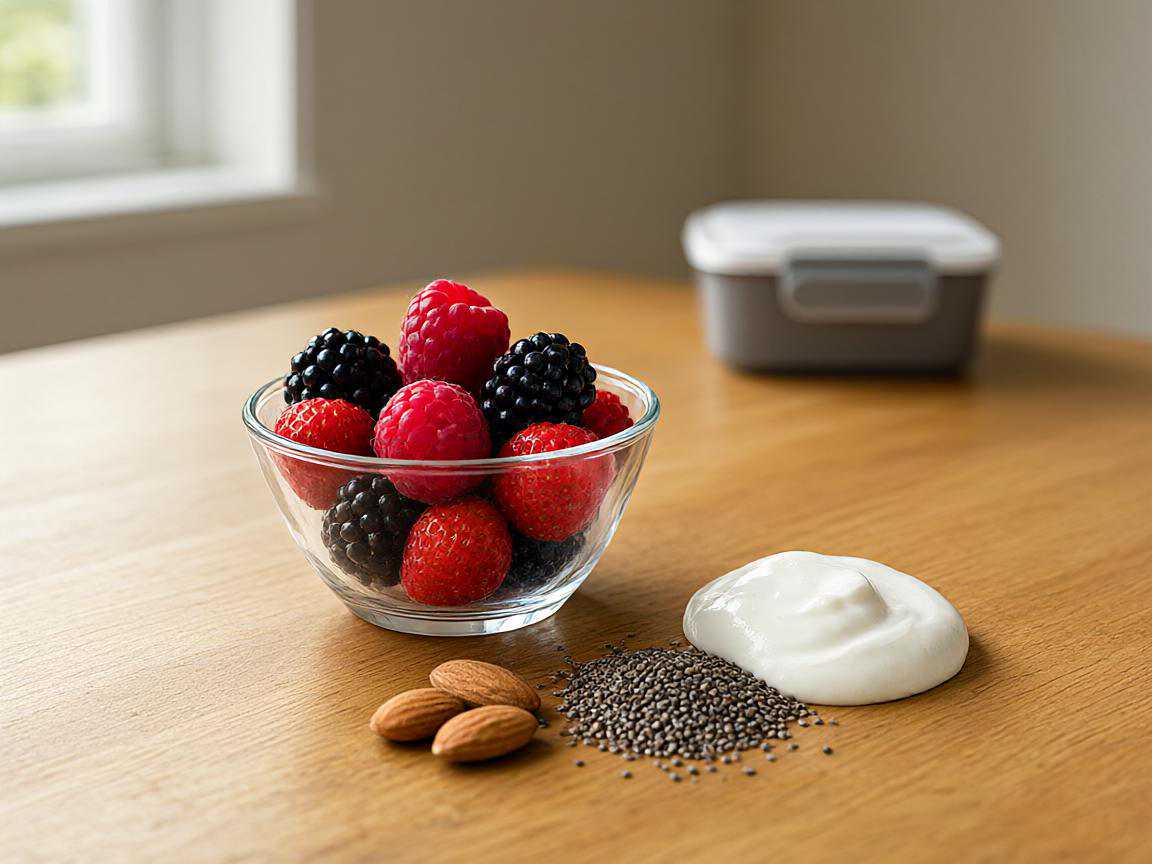
- 1/3 cup finely mashed ripe banana, about 75 to 85 grams after peeling
- 1 1/2 cups finely ground blanched almond flour
- 1 tablespoon coconut flour
- 2 large eggs, at room temperature
- 3 tablespoons melted unsalted butter or neutral avocado oil
- 2 tablespoons granulated sweetener that fits your eating plan
- 1 teaspoon banana extract with no added sugar, if available
- 1 teaspoon vanilla extract
- 1 teaspoon ground cinnamon
- 1/4 teaspoon nutmeg, optional
- 1 1/2 teaspoons baking powder
- 1/4 teaspoon fine salt
- 1/3 cup chopped walnuts or pecans
- 1 tablespoon hemp hearts, optional
You will also need an eight-well muffin tin, paper liners, a mixing bowl, a smaller bowl for the wet ingredients, and a kitchen scale if possible. A scale is especially helpful for the banana because the difference between 75 grams and 120 grams is meaningful in both moisture and carbohydrate calculations.
Prepare the banana bread muffin batter
1. Measure and mash the banana
Peel the banana and weigh the portion before mashing. Use about 75 to 85 grams for this batch. Mash it with a fork until mostly smooth. A few tiny pieces are fine, but large pieces can create wet pockets in the muffins. Stir in the banana extract and vanilla. The extract is not meant to replace the food value of the banana; it simply strengthens the aroma so the recipe does not need more fruit to taste recognizable.
2. Combine the dry ingredients
Whisk the almond flour, coconut flour, cinnamon, nutmeg, baking powder, and salt in a medium bowl. Break up any lumps. Finely ground almond flour usually gives the most even crumb, while coarse meal makes a heavier muffin. If your flour has been stored in the refrigerator, let it come close to room temperature before mixing so the melted butter does not firm up immediately.
3. Whisk the wet ingredients
In a second bowl, whisk the eggs with the melted butter or oil and sweetener. The fat should be warm, not hot. Add the banana mixture and whisk until the liquid looks evenly blended. If you use a liquid sweetener, expect the batter to be softer and allow a few extra minutes of resting time. Do not add extra liquid automatically; the banana and eggs already provide substantial moisture.
4. Fold and rest
Add the dry ingredients to the wet ingredients and fold with a spatula. Stop as soon as the dry streaks disappear. Fold in the nuts and hemp hearts if using. Let the batter rest for five minutes. Coconut flour absorbs liquid quickly, and this short pause gives it time to hydrate. The finished batter should be thick enough to mound slightly on a spoon but still easy to portion.
5. Fill and bake
Heat the oven to 350°F or 175°C. Line eight muffin wells. Divide the batter evenly, filling each well about three-quarters full. Bake for 20 to 27 minutes, rotating the pan once if your oven has hot spots. The tops should look set and lightly golden. A toothpick inserted in the center should come out with a few moist crumbs, not streaks of wet batter.
6. Cool completely
Let the muffins cool in the pan for 10 minutes, then transfer them to a rack. Do not seal them while they are still warm because trapped steam can make the tops damp and the centers gummy. Wait until they are fully cool before calculating their final texture. If you want a firmer crumb, refrigerate them for 30 minutes after cooling.
Texture checks and troubleshooting
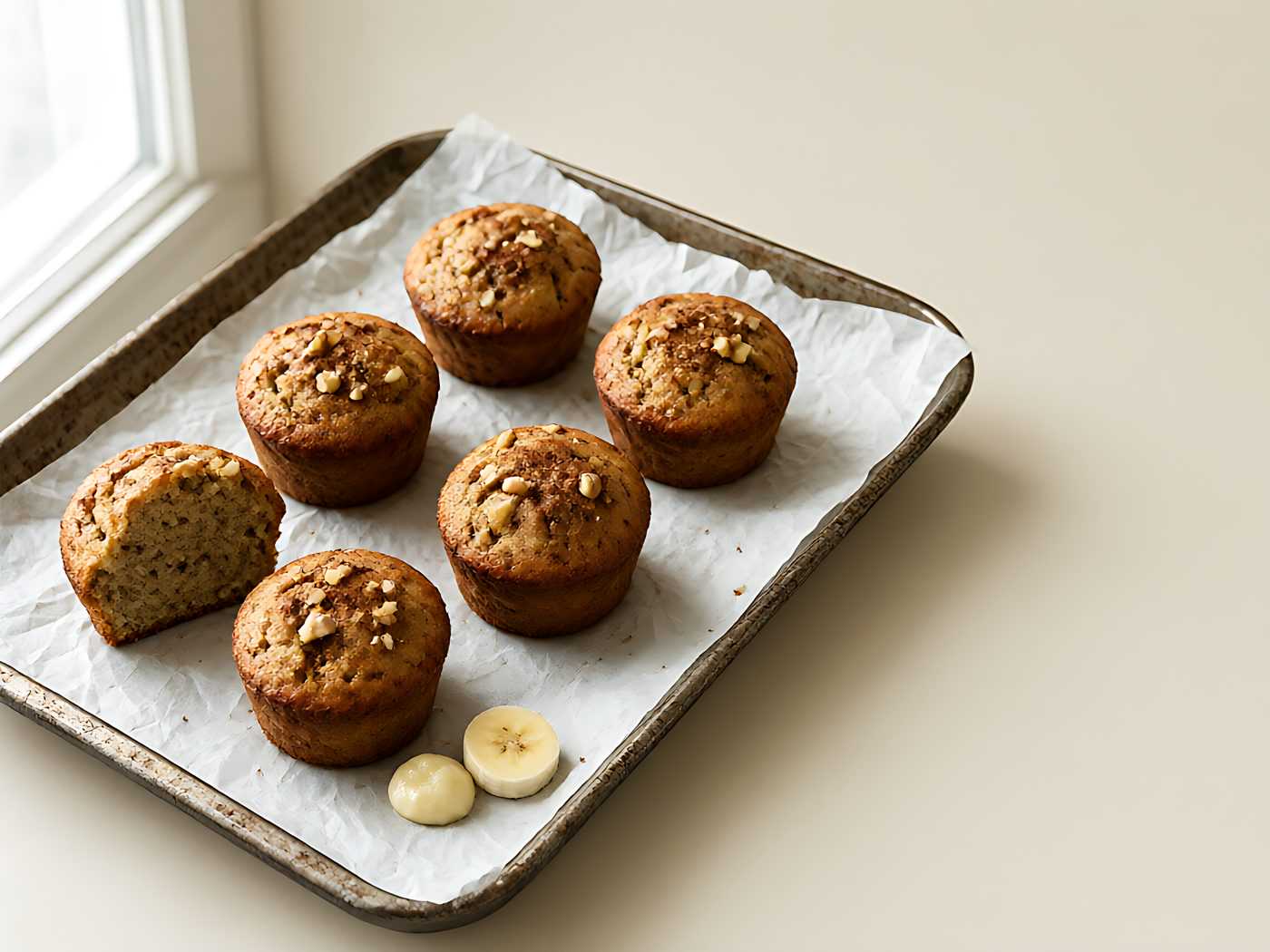
A properly baked muffin should feel soft when pressed lightly but should not leave wet batter on your finger. If the center is sticky after cooling, the common causes are an oversized banana portion, an underheated oven, crowded muffin wells, or sealing the muffins while hot. Place questionable muffins back in a low oven for several minutes, then cool them again. If only the center sinks, let the next batch bake a little longer before removing it.
If the muffins are dry, check whether the almond flour was packed tightly into the cup, whether the eggs were unusually small, or whether the pan stayed in the oven too long. Coconut flour can also make a batter dry if more than the listed tablespoon is added. If your batter seems very thick after the five-minute rest, add one tablespoon of unsweetened milk or water at a time, but remember that any change affects the texture and nutrition.
Flavor variations
Cinnamon pecan
Replace the walnuts with chopped pecans and add an extra pinch of cinnamon. The flavor is warm and dessert-like without needing a glaze. Keep the nut amount measured because nuts are concentrated foods even when they contribute little sugar.
Lemon banana
Add one teaspoon of finely grated lemon zest and reduce the nutmeg. Lemon zest provides brightness without adding much liquid. Avoid pouring in lemon juice unless you adjust the batter, because the extra liquid can create a damp center.
Cocoa banana
Replace two tablespoons of almond flour with unsweetened cocoa powder. Cocoa varies in bitterness, so taste the baked muffin rather than assuming the batter needs more sweetener. Check that the cocoa has no added sugar. A few sugar-free chocolate chips can work, but read their carbohydrate and sweetener information carefully.
Seeded breakfast muffin
Use pumpkin seeds and hemp hearts instead of walnuts. This creates a more substantial bite and makes the muffins useful alongside eggs or plain yogurt. Seeds still contain calories and carbohydrates, so add them for texture and nutrition, not as a free ingredient.
Label and carbohydrate checks
The word low carb on a package is not a substitute for the nutrition panel. Calculate the recipe by adding the total carbohydrate from the banana, almond flour, coconut flour, sweetener, nuts, and any optional ingredients. Then divide by the number of muffins you actually make. If you make seven large muffins instead of eight smaller ones, the carbohydrate per piece will be higher.
Sweeteners can contain fillers such as sugar, maltodextrin, or starch. Some sugar alcohols are tolerated well by some people and cause digestive discomfort for others. A product marked no added sugar may still contain significant total carbohydrate. Banana extract is used in a small quantity, but formulations vary, so inspect its ingredient list instead of assuming every bottle is the same.
Almond flour brands also differ in serving size, fiber, and grind. Use the values on your bag rather than copying a generic database entry. If you are comparing these muffins with a purchased bread or baked snack, our 92nd keto bread guide explains how to review serving size, fiber claims, and ingredients in a practical way.
Portioning and serving ideas
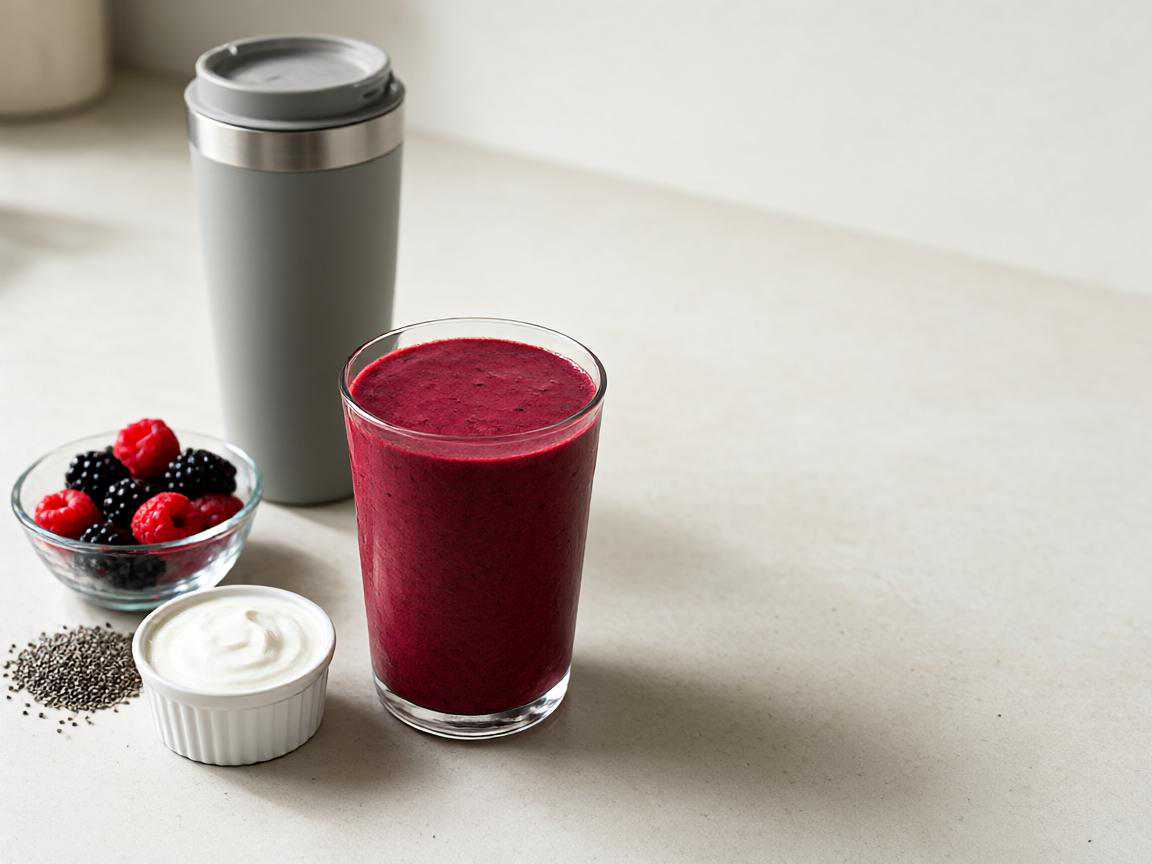
One muffin can be a snack, but it may not be a complete breakfast for everyone. Pair it with plain Greek yogurt, cottage cheese, a boiled egg, or another protein that fits your plan. You can also add cucumber slices or a few berries if those foods work within your carbohydrate target. The purpose of the pairing is to make the snack more satisfying, not to turn one muffin into an elaborate meal.
For an office container, pack one chilled muffin with a cheese portion and a small cup of plain yogurt. For a travel day, place the muffins in a rigid container so they do not get crushed, and use a cold pack if they will be out for several hours. A moist egg-based muffin should not sit in a warm car or desk drawer all day. The office snacks guide has additional ideas for keeping portions visible and safe without relying on a kitchen.
For a batch-cooking routine, the meal-prep hub can help you plan cooling, labeling, and freezer portions. A simple system is to keep two muffins in the refrigerator for the next two days and freeze the rest individually. That prevents the entire batch from becoming an automatic counter snack.
Storage and freezing
After cooling, store the muffins in a sealed container in the refrigerator for up to four days. Use parchment between layers if you want the tops to stay neat. Refrigeration firms the crumb, so warm one briefly in a toaster oven or microwave if you prefer a softer texture. Make sure the center is heated evenly, especially if the muffin was frozen.
To freeze, place the cooled muffins on a tray until firm, then transfer them to a labeled freezer bag. Use them within about two months for the best flavor and texture. Thaw them overnight in the refrigerator or warm them gently from frozen. Do not refreeze a muffin that has fully thawed and remained at room temperature.
Discard any muffin that develops mold, an off smell, an unusually wet surface, or a texture that has changed in a suspicious way. Reheating does not make spoiled food safe. Storage estimates depend on refrigerator temperature, handling, and moisture, so use your judgment.
Common mistakes
- Adding a whole banana without recalculating: the extra fruit can make the centers wet and raise the carbohydrate total. Weigh the portion.
- Using a direct almond-flour-to-coconut-flour swap: coconut flour absorbs far more liquid and needs a different formula.
- Skipping the rest period: the batter may bake unevenly when coconut flour has not hydrated.
- Overfilling the wells: thick muffin tops can brown before the centers are ready. Keep the batter around three-quarters full.
- Sealing while warm: trapped steam creates damp tops and a gummy crumb.
- Adding a sweet glaze by habit: syrup, frosting, or sweetened nut butter can change the nutrition more than the muffin itself.
How to keep banana flavor without adding more banana
Banana flavor is strongly connected to aroma, so extract, vanilla, cinnamon, and browned nuts can make a small fruit portion feel more complete. Toast the nuts lightly before chopping if you want a deeper flavor. Use fresh cinnamon and measure the extract rather than pouring freely. Too much extract can taste artificial, while too little leaves the muffin tasting like plain almond cake.
If you want a loaf instead, use the same batter in a lined small loaf pan and bake until the center is set. Expect a longer baking time and check the middle carefully. Muffins remain easier to cool, freeze, and count, which is why they are often the more practical choice for weight-management routines. The snack ideas hub includes other portion-friendly formats that can be paired with protein or produce.
Frequently asked questions
Can I omit the banana?
Yes, but the result will be a cinnamon-nut muffin rather than a banana bread muffin. You can keep the banana extract for aroma, but any replacement such as yogurt or pumpkin puree changes moisture and should be recalculated. The fruit portion is small, yet it still contributes the characteristic taste and a little natural sweetness.
Can I make these muffins with coconut flour only?
Not by replacing the almond flour cup for cup. Coconut flour requires more eggs and liquid and usually produces a different crumb. Use a tested coconut-flour muffin formula if almond flour is not suitable for you. Do not assume that a small substitution will work without adjustment.
Why did the tops crack?
Small cracks are normal in almond-flour muffins and often show that the batter expanded while baking. Very deep cracks can happen when the oven is too hot or the wells are overfilled. Reduce the temperature slightly or distribute the batter more evenly in the next batch.
Can I use a sugar-free chocolate chip?
You can if the product fits your dietary needs and you have checked its label. Sugar-free does not always mean carbohydrate-free, and some sweeteners can cause digestive symptoms. Add a measured amount and include it in the recipe calculation.
Are these muffins suitable for every keto plan?
No. People have different carbohydrate targets, allergies, digestive responses, and medical considerations. A measured banana portion may fit one plan and not another. Use your own targets and professional advice when those apply.
These low carb banana bread muffins are most useful when treated as a measured baked snack rather than an unlimited replacement for traditional banana bread. Weigh the banana, read the labels, use extract for aroma, cool the muffins fully, and store them in portions. That combination keeps the recipe practical, transparent, and easy to repeat on a normal week.