Bacon for a keto diet is often discussed as if the answer were simply yes or no. Plain bacon is usually low in carbohydrate, but the best choice depends on the cure, serving size, sodium, saturated fat, preparation method, and the other foods on the plate. A lower-carb eating pattern can include bacon without making bacon the foundation of every meal.
This guide explains how to evaluate bacon for a keto diet, compare labels, plan portions, cook it, pair it with vegetables and protein, store it, and pack it safely. It also separates practical nutrition guidance from marketing claims. The goal is a repeatable decision process that works whether you buy pork bacon, turkey bacon, Canadian bacon, or a specialty flavored product.
For smaller bites, visit the snack ideas hub. Bacon can add flavor to a snack, but a protein-and-vegetable combination is usually more useful than eating an undefined amount from the package.
Is bacon compatible with keto?
Many traditional bacon products contain very little carbohydrate because their main ingredients are pork, salt, water, and curing agents. However, maple, honey, barbecue, peppered, and brown-sugar styles may add sugar or other carbohydrate sources. Some turkey and plant-based products contain starches or sweeteners to improve texture. Compatibility therefore depends on the current label and the serving you actually eat.
Keto also describes a pattern rather than a single food. A meal can be low in carbohydrate while still being high in sodium, saturated fat, and total calories. If bacon is combined with sausage, cheese, butter, cream, and a large amount of avocado, the carbohydrate may remain low but the meal can become difficult to fit into a weight-management plan.
Use bacon as one choice among many proteins. Eggs, fish, chicken, beef, tofu, and unsweetened dairy can bring different nutrient profiles and textures. Rotating options makes it easier to manage sodium and avoid building every meal around processed meat.
What to check on the label
Begin with serving size and the number of slices. A package may define one serving as one slice even though the slices are thick, or it may list two thin slices. Compare total carbohydrate and added sugar, then review sodium, saturated fat, protein, and calories. If you use a flavored bacon, look closely for maple syrup, sugar, honey, molasses, dextrose, or starch.
Compare the raw and cooked forms carefully. Bacon loses water and renders fat as it cooks, so a cooked slice weighs less and may contain a different amount of fat per gram. The easiest way to stay consistent is to record the form named on the label and use the same form when planning portions.
Terms such as uncured, natural, hardwood smoked, and keto are not complete nutrition statements. Uncured products may still use celery-derived curing ingredients and can still be high in sodium. “No added sugar” does not mean no carbohydrate from every ingredient. Read the ingredient list and nutrition panel together.
Bacon varieties and when to use them
Pork belly bacon is rich and crisp, which makes it useful as a small topping. Thick-cut bacon feels more substantial but usually needs longer cooking and may provide more calories per slice. Canadian bacon is leaner and works well in egg dishes, breakfast bowls, or sandwiches. Turkey bacon can be lighter in fat in some brands, but texture and sodium vary considerably.
Specialty bacon can bring smoke, pepper, maple, chili, or barbecue flavor. That flavor may be helpful when used in a defined portion, but it can also hide added sugar. If the label contains a sweet cure, plan it as a flavored ingredient rather than assuming it is the same as plain bacon.
For meal prep, thin bacon is easy to crumble and freeze. For a breakfast plate, thick-cut bacon may feel more satisfying with a smaller number of slices. For a leaner protein plate, Canadian bacon may be more suitable. The “best” type is the one whose actual label and portion fit the person eating it.
Portion strategy
A simple strategy is to decide what role bacon plays. If eggs, chicken, or fish are the main protein, use bacon as a supporting flavor. If bacon is the main protein for one meal, keep the rest of the plate vegetable-forward and avoid stacking several processed meats. If bacon is a snack, put a defined amount on a plate and add a fresh vegetable or a boiled egg if needed.
Do not let the package decide your portion. Restaurant servings and casual handfuls can be much larger than the label serving. Weighing cooked bacon is useful when tracking closely, but a repeatable slice count can also work if the product is consistent.
If your goal includes weight management, look at the whole meal. Bacon, cheese, avocado, nuts, butter, and creamy dressing are all easy to add in small amounts that accumulate. You do not need to avoid every rich food, but it helps to choose one or two primary fat sources rather than all of them at once.
Cooking bacon for better texture
Oven baking is convenient for a batch. Arrange slices in one layer on a rimmed sheet pan and bake at about 400°F or 205°C until crisp or tender according to preference. Move cooked bacon to a rack or paper-lined plate. Allow it to cool before sealing the container so trapped steam does not make it soft.
Skillet cooking begins well in a cold pan. Bring the heat up gradually so fat renders without immediately burning the edges. Turn the slices as needed and remove them when done. If you cook vegetables in the rendered fat, consider how much remains rather than treating it as invisible.
An air fryer can work for a small batch, but times vary by model and thickness. Check early and clean the tray after it cools. Faster cooking does not mean cooked bacon is safe to leave warm for hours.
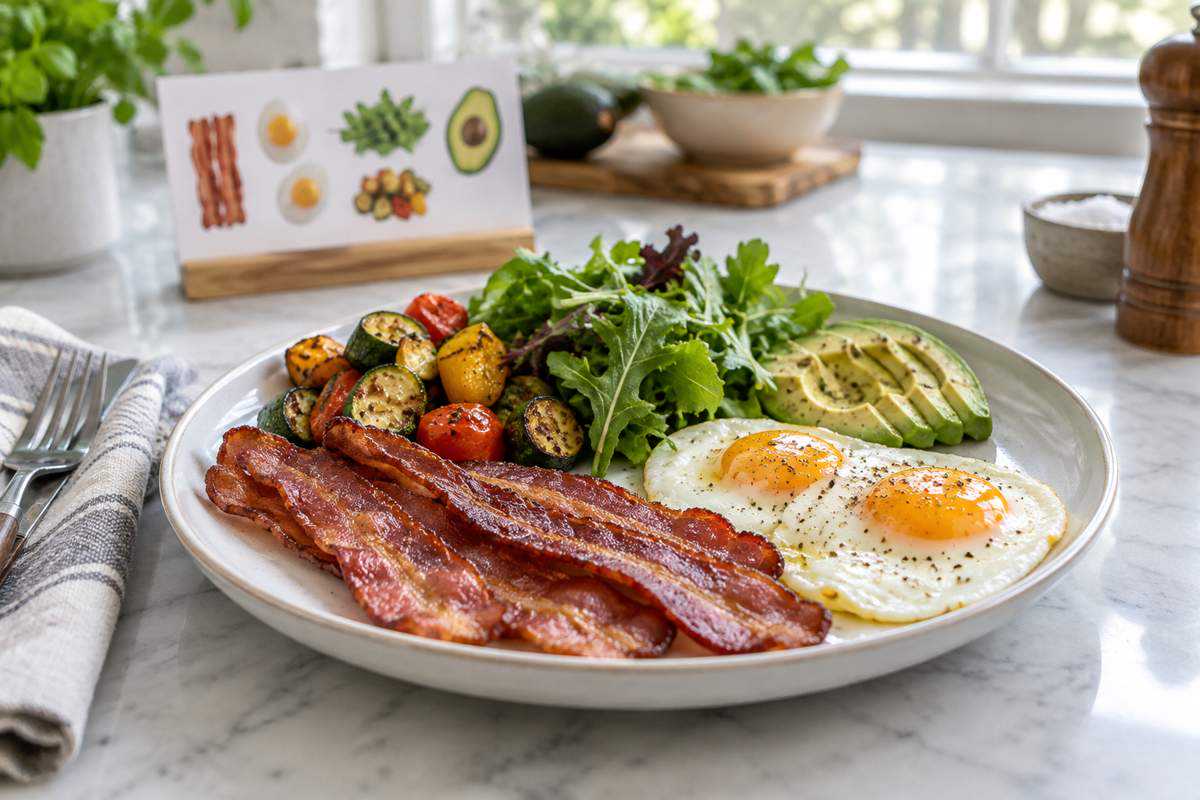
Meal idea 1: bacon and egg breakfast plate
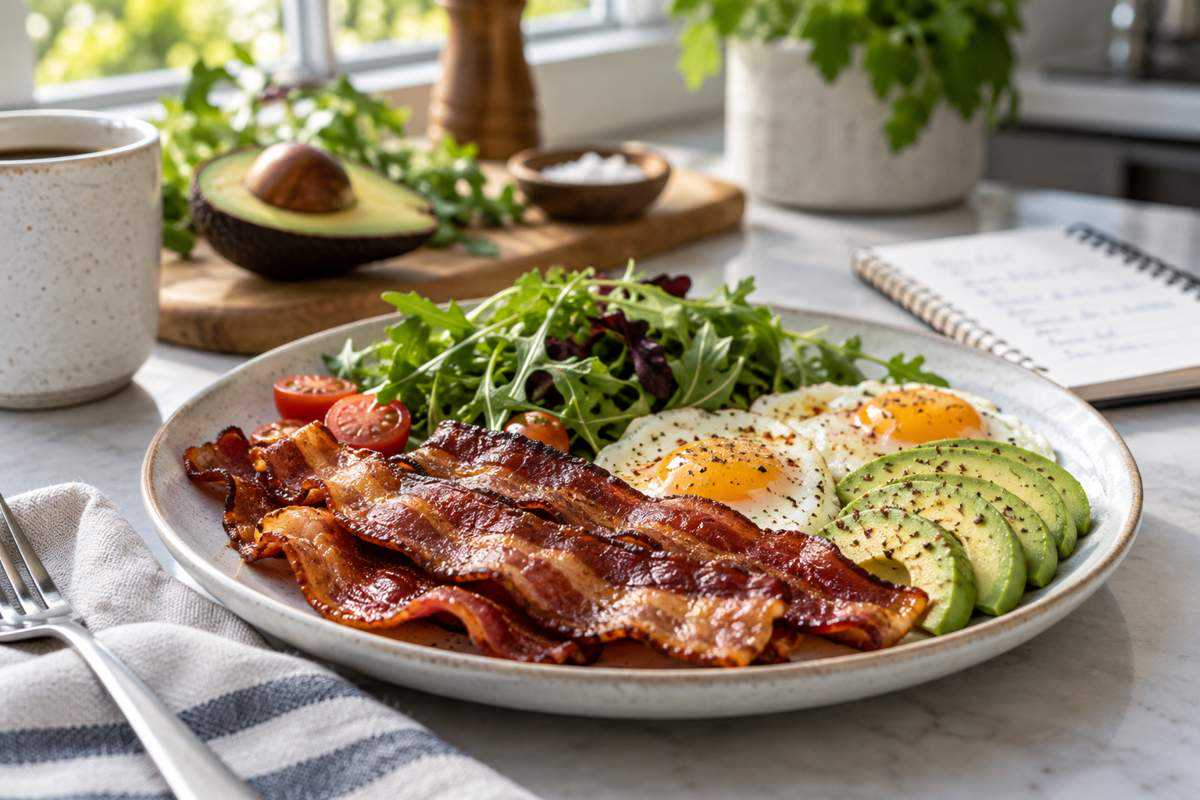
Serve one or two eggs with a measured bacon portion, sautéed greens, mushrooms, and sliced tomato if it fits your plan. Use lemon, pepper, herbs, or chili to add brightness. If the bacon is salty, cook the eggs without extra salt.
Avocado can be added, but it is not required. If you include avocado, cheese, and butter, reduce one of the other rich ingredients. The point is not to make the plate austere; it is to keep the main sources of fat visible.
Meal idea 2: bacon and cabbage skillet
Cook bacon, remove it, and sauté cabbage, mushrooms, garlic, and pepper in a controlled amount of the rendered fat. Return the bacon near the end so it stays distinct. Add vinegar or lemon to balance the richness. Add chicken, eggs, or tofu if the skillet needs more protein.
Cabbage absorbs salt and can become watery if the pan is crowded. Use a wide pan, cook in batches if necessary, and taste before adding seasoning. This meal reheats better than delicate greens, which makes it practical for lunch prep.
Meal idea 3: bacon-wrapped vegetables
Wrap a narrow piece of bacon around asparagus, green beans, or a small bundle of mushrooms. Roast until the bacon is cooked and the vegetables are tender. If the bacon is thick, partially cook it first so the vegetables do not become overdone while waiting for the meat to crisp.
Use these bundles as a side or appetizer rather than assuming they supply a complete meal. The low carb appetizer guide offers other small savory formats that can be combined with a clearer protein portion.
Meal idea 4: bacon and chicken salad
Combine chopped chicken, a small amount of crumbled bacon, greens, cucumber, celery, and a lemon-mustard dressing. Add a spoonful of plain yogurt or mayonnaise if desired, but measure it. The bacon should add smoke and salt rather than become the largest part of the salad.
For meal prep, keep the dressing and bacon separate. Add the bacon shortly before eating so it remains crisp. If the chicken is packaged or seasoned, check its sodium before adding more salt.
Meal idea 5: bacon lettuce cups
Fill sturdy lettuce leaves with bacon, egg, avocado, cucumber, and herbs. A small amount of mustard or plain yogurt can bind the filling. Drain wet ingredients so the leaves do not tear. Use cabbage leaves if you need a stronger wrapper.
When packing, carry lettuce and filling separately. Bacon, eggs, and avocado all need safe temperature control. Add the filling close to serving to protect texture.
Meal idea 6: bacon and cauliflower soup topping
Make a vegetable soup from cauliflower, mushrooms, greens, garlic, and unsalted stock. Crumble a small amount of bacon over each bowl instead of stirring a large amount into the pot. That makes the portion visible and adds contrast.
Check the stock label for sodium and taste before seasoning. If the soup is already rich, use herbs and lemon rather than cream and extra bacon. The topping is there to add flavor and texture.
Bacon and weight management
Low carbohydrate can be useful for some people, but it does not override energy balance or individual health needs. Bacon is easy to overeat because it is salty, crisp, and flavorful. If you are hungry soon after a bacon-centered meal, consider whether you need more protein, vegetables, or a different meal structure rather than simply adding more bacon.
Use a plate or container instead of eating from the cooking tray. Count the bacon, rendered fat, cheese, avocado, nuts, and dressing as part of the meal. A small portion can fit easily; several small additions can produce a very different result.
Satiety is personal. Some people prefer bacon as a small flavor accent, while others enjoy a larger serving occasionally. Use your appetite, energy, digestion, health goals, and clinician guidance as feedback.
Sodium, saturated fat, and processed meat
Bacon is commonly high in sodium and can be high in saturated fat. People managing high blood pressure, kidney disease, heart disease, or other conditions may need specific limits. A lower-carbohydrate diet is not a reason to ignore those limits.
Rotate proteins and include vegetables, fish, eggs, poultry, tofu, or other options that fit your preferences. If you choose bacon, use the amount that supports the meal and avoid assuming that a “healthier” label removes all concerns. Lower-sodium products may still need careful portions.
Processed meat guidance varies by person and professional organization. This article does not diagnose or prescribe. If you have a medical condition or take medication affected by diet, ask a qualified professional how bacon fits into your plan.
Storage and food safety
Cool cooked bacon promptly and refrigerate it in a sealed container. Separate slices with parchment if you want to reheat them individually. Freeze extra portions if you will not use them soon. Label the date and reheat only the amount you intend to eat.
Do not leave bacon in a warm car, backpack, or desk drawer. Pairing it with eggs, chicken, dairy, seafood, or mayonnaise increases the need for cold storage. If the bacon smells sour, feels slimy, shows mold, or has an uncertain temperature history, throw it away.
Rendered fat should also be cooled and stored appropriately if you keep it. Strain out food particles and use a clean container. Treat it as an ingredient, not as an unlimited cooking liquid.
Portable bacon meals
For work, pack bacon with a boiled egg, cucumber, celery, or a chilled salad. Keep crisp bacon in a separate compartment from dressing. For travel, bacon crumbles can be added to a salad at the destination, while a bacon sandwich should be assembled close to eating.
Use a cold pack for all perishable combinations. The office snack guide provides additional ideas for carrying components separately. A practical packing plan protects both food safety and texture.
If refrigeration is not available, choose a shelf-stable protein instead of assuming cooked bacon can remain safe all day. The “low carb” status of a food says nothing about how long it can sit at room temperature.
How to compare bacon with alternatives
Compare bacon with Canadian bacon, turkey bacon, chicken, salmon, eggs, and plant-based alternatives using protein, sodium, carbohydrate, saturated fat, ingredients, and serving size. A leaner product may require a sauce or additional fat for texture. A plant-based product may contain starches or oils. There is no need to choose by category alone.
If you use low-carb bread, check that label too. A sandwich with low-carb bread and bacon may still be high in sodium and saturated fat. The keto bread guide explains how to evaluate the base and the full serving rather than focusing on a single front-of-package claim.
Meal-prep strategy
Cook a small batch, portion it immediately, and plan several uses. Use bacon with eggs for breakfast, cabbage for dinner, and salad or lettuce cups for lunch. Keep a protein rotation so bacon is not the only convenient option. Store the bacon separately from wet foods and add it at the last minute.
The meal-prep hub can help organize cooked proteins, vegetables, sauces, and toppings. Bacon works well as a topping because a small amount changes flavor, but its role should remain intentional.
Frequently asked questions
Can bacon be part of a keto breakfast? Yes, many people use it with eggs and vegetables. Choose a portion and check the label, especially for flavored products.
Is turkey bacon better? Not automatically. Compare actual sodium, protein, carbohydrate, calories, and ingredients. Preference and dietary needs matter.
Does uncured bacon have no nitrates? The term can be confusing. Some products use celery-derived curing ingredients. Read the package and ask a professional if you have a specific concern.
Can I eat bacon every day? That depends on your whole diet and health needs. Rotating proteins is often a practical way to reduce reliance on processed meat and manage sodium.
Can bacon help with weight loss? No single food guarantees weight loss. Bacon can add flavor and satiety, but portions and total intake still matter.
Final takeaway
Bacon for a keto diet is a label-and-portion decision, not a blanket permission. Plain bacon may be very low in carbohydrate, while flavored products can contain sugar or starch. Compare serving sizes, cook carefully, store safely, and build the meal around vegetables and a clear protein.
Use bacon where it adds smoke, salt, and texture. Rotate other proteins, watch the rich extras that accompany it, and follow professional advice when health conditions affect sodium, saturated fat, or processed meat choices. That makes bacon a useful ingredient without turning it into the entire diet.