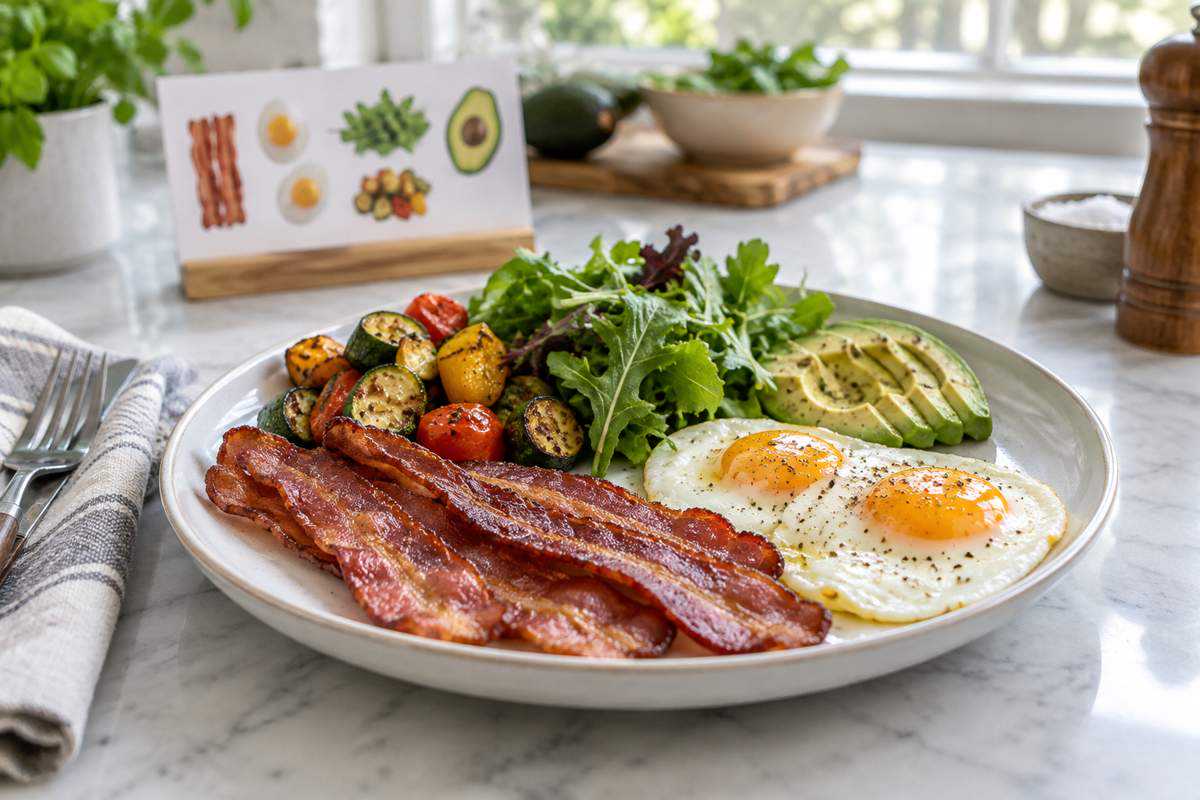
Low carb bacon can fit many lower-carbohydrate meals, but the phrase does not tell you the whole story. Bacon is usually low in carbohydrate because it is a cured meat, yet brands differ in sugar, sodium, fat, ingredients, slice size, and cooking yield. The useful question is not simply whether bacon is “allowed.” It is how to choose it, how much to use, what to pair it with, and how to store it safely.
This guide explains label terms, common bacon styles, practical portions, cooking methods, snack and meal ideas, meal-prep storage, and portable uses. It also covers honest product disclosures and why low carbohydrate is not the same as low calorie or automatically healthy. Use the information as a framework for comparison, then apply your own nutrition needs and medical guidance.
If you are planning a small bite rather than a full meal, start with the snack ideas hub. Bacon is usually more useful as a measured protein or flavor accent than as the entire snack.
What makes bacon low in carbohydrate?
Bacon is made from pork belly or another pork cut that is cured, seasoned, and cooked. The meat and fat themselves contain little carbohydrate. Carbohydrate can enter through sugar, maple flavoring, honey, molasses, brown sugar, or other sweet ingredients in the cure or glaze. Some products also include starches or sweet sauces that change the nutrition profile.
Serving size is important. A package may list nutrition for one or two slices, while the slices vary in thickness and length. A restaurant portion can be much larger than the package serving. If you need accurate tracking, weigh the cooked portion or use the package’s stated slice count consistently.
Low carbohydrate also does not mean low sodium, low fat, or low calorie. Bacon can be part of a balanced meal, but it is usually best treated as one ingredient alongside eggs, vegetables, avocado, or another protein. Relying on bacon as the main protein at every meal may make sodium and saturated fat harder to manage.
Types of bacon to compare
Traditional pork belly bacon is the familiar streaky style. Center-cut bacon may have a different fat-to-meat ratio and slice size, but the name alone does not determine nutrition. Canadian bacon is leaner and resembles a cured ham slice. Turkey bacon can be lower in fat in some brands, but it may contain more starch, sweeteners, or sodium to improve texture and flavor.
Thick-cut bacon takes longer to cook and produces a different amount of rendered fat per slice. Uncured bacon is still generally cured with ingredients such as celery powder and is not automatically free of nitrates or sodium. Applewood, peppered, maple, and barbecue styles can add flavor but may contain sugar or sweeteners.
Choose a style based on use. Thin bacon works for crumbling into salads or wrapping vegetables. Thick bacon works as a centerpiece for breakfast but may be more energy-dense per slice. Canadian bacon can add a leaner protein element to an egg dish. Turkey bacon may suit someone who prefers its texture, but compare the actual label rather than assuming it is the better choice.
How to read the bacon label
Start with the serving size and number of slices. Then check total carbohydrate, added sugar, sodium, saturated fat, and calories. Read the ingredients for sugar, brown sugar, maple syrup, honey, molasses, corn syrup, starch, and flavor blends. A product can contain only a small amount of sugar and still be compatible with a person’s plan, but you should know it is there.
Compare products by cooked serving when possible. Bacon loses water and renders fat during cooking, so the cooked slice weighs less than the raw slice. If you compare raw package information with a cooked food log, be consistent about which form you are measuring.
Flavor claims can be misleading. “Natural,” “uncured,” “smokehouse,” and “keto” do not replace the nutrition panel. A maple-flavored product may use a small amount of maple sugar or a sugar-free flavor system; only the current ingredient list tells you which. If you have a serious allergy or follow a religious or medical diet, review processing statements as well.
Portion planning
A practical portion depends on the rest of the meal. Two slices may be enough as a flavor accent over eggs and vegetables. A larger serving may provide more protein, but it also brings more sodium and fat. If bacon is paired with cheese, avocado, sausage, and butter, the meal can become energy-dense quickly even when carbohydrate remains low.
One useful method is to choose a main protein and a supporting protein. For example, use eggs or chicken as the main protein and bacon as the supporting flavor. Another option is to use bacon as the main protein for one meal but keep the rest of the plate vegetable-forward and avoid stacking several salty processed meats.
Portion planning is especially important for snacks. Bacon bites can be satisfying, but eating directly from a container makes it difficult to notice how much you have consumed. Put a defined portion on a plate and add cucumber, celery, radishes, or a boiled egg if you need more volume.
Cooking method 1: oven-baked bacon
For an even batch, arrange bacon in a single layer on a rimmed sheet pan. Use parchment if desired, then bake at 400°F or 205°C until the slices reach the texture you like. Thin slices may cook quickly, while thick slices need more time. Move the cooked bacon to a rack or paper-lined plate so excess fat drains.
Oven cooking is useful for meal prep because the heat is consistent and several portions can be made at once. Watch the final minutes carefully. The bacon can go from crisp to bitter quickly. Let it cool before sealing it, because trapped steam softens the texture.
Strain and store rendered fat only if you have a safe, appropriate use for it. It should not be kept indefinitely at room temperature. A small amount can flavor vegetables, but it is still an added fat and should be considered in the meal.
Cooking method 2: skillet bacon
Place bacon in a cold skillet and bring it to medium heat. Starting cold allows the fat to render gradually and can reduce scorching. Turn the slices as needed and remove them when they reach the desired crispness. Use a splatter screen if necessary.
A skillet lets you cook eggs or vegetables in some of the rendered fat, but measure what remains. It is easy to add more oil without noticing because the pan already looks coated. If the pan contains a large amount of fat, pour off some before adding vegetables.
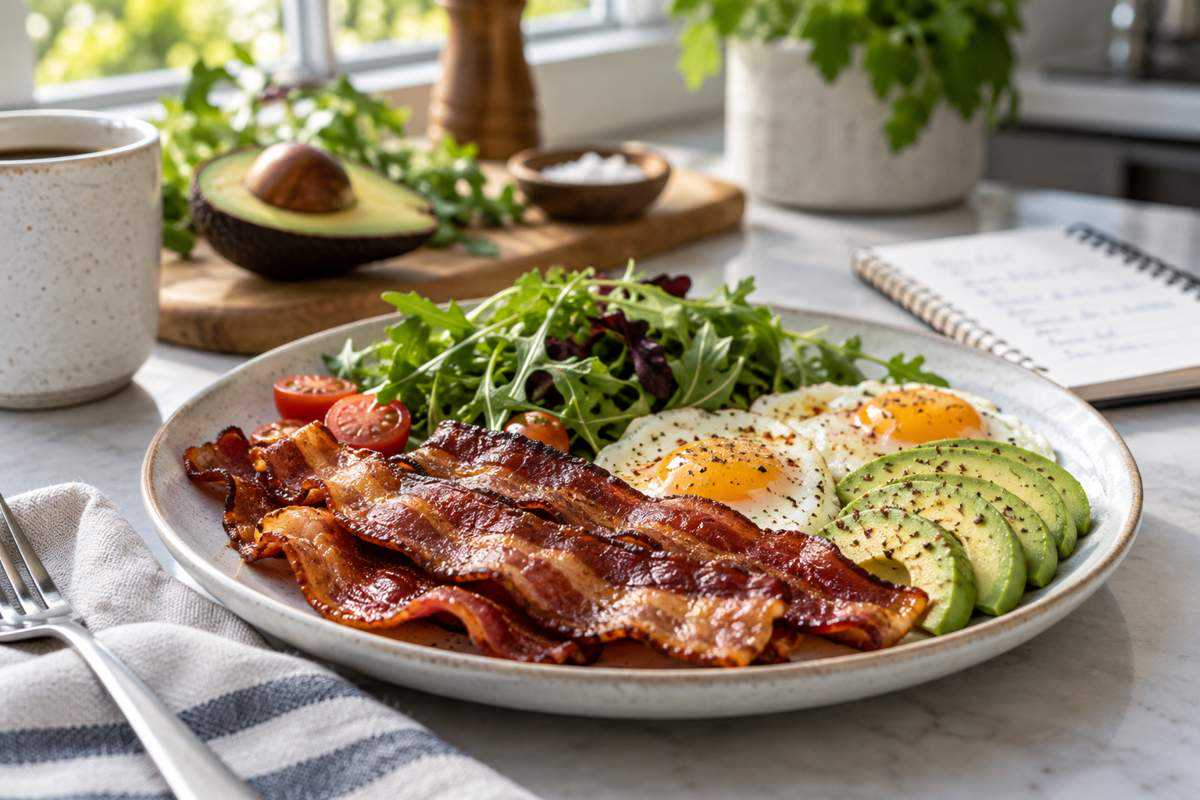
Cooking method 3: air fryer bacon
An air fryer can produce crisp bacon quickly, but times vary by model and slice thickness. Use a temperature recommended by your appliance manual, keep the basket from being overcrowded, and check early. Grease can drip into the tray, so clean the appliance carefully after it cools.
This method is convenient for a small serving. It is less useful for a large batch if the basket is small. Do not assume that faster cooking means the bacon is safer to leave out longer; cooked bacon still needs appropriate cooling and storage.
Meal idea 1: bacon, egg, and greens bowl
Build a bowl with two eggs, a measured amount of crumbled bacon, greens, cucumber, and a lemon-mustard dressing. Add avocado if you want more creaminess, but consider the full fat content of the meal. The greens provide volume while lemon and mustard balance the salt.
Check mustard labels for added sugar. If the bacon is strongly seasoned, do not add extra salt to the eggs or dressing. A few chopped herbs can make the bowl taste fresher without adding another salty ingredient.
Meal idea 2: bacon-wrapped asparagus
Wrap a thin piece of bacon around several asparagus spears and roast until the bacon is cooked and the asparagus is tender. Use only enough bacon to hold the bundle together. Thick bacon can overcook the asparagus before it becomes crisp, so adjust the oven time or partially cook the bacon first.
Serve the bundles with chicken, salmon, or eggs if you need a full meal. The bundle alone may be more of a side or appetizer. The low carb appetizer guide offers other ways to use small savory portions without treating them as a complete meal.
Meal idea 3: bacon and cauliflower skillet
Cook bacon, remove it, and sauté cauliflower rice, mushrooms, scallions, and pepper in a controlled amount of rendered fat. Return the bacon at the end so it remains crisp. Add lemon or vinegar if the skillet tastes heavy.
Cauliflower absorbs seasoning, so taste before adding salt. If the bacon is already salty, herbs, garlic, chili, and acid usually work better than more salt. Add a clear protein portion such as chicken or eggs if the skillet is your main meal.
Meal idea 4: bacon and avocado lettuce cups
Fill sturdy lettuce leaves with chopped bacon, egg, avocado, cucumber, and a spoonful of plain yogurt or mustard. Keep the filling dry enough that the leaves do not tear. Use a small portion of bacon and let the avocado or egg provide the creamy element.
For transport, pack the lettuce and filling separately. Avocado and dressing can soften the leaves. A cold pack is required because eggs, bacon, and dairy are perishable foods.
Meal idea 5: bacon, chicken, and cabbage bowl
Sauté shredded cabbage with garlic and black pepper, then add cooked chicken and a measured amount of bacon. Finish with vinegar or lemon. This combination reheats better than delicate greens and works well for meal prep.
Because cabbage and chicken can both take on salt, choose a lower-sodium bacon if it fits your preferences and do not add soy sauce automatically. If the meal needs more richness, use a small amount of oil or avocado rather than stacking bacon, cheese, and cream.
Meal-prep storage
Cool cooked bacon promptly and store it in a sealed container. Separate slices with parchment if you want to reheat them individually. Refrigerate cooked bacon and use it within a suitable food-safety period based on your local guidance and the rest of the meal. Reheat until hot when serving with other cooked foods.
Cooked bacon can be frozen in small portions. Wrap or separate slices before freezing, label the date, and reheat only the amount you need. Freezing may change the texture slightly, but it is convenient for crumbled bacon used in eggs, salads, and vegetables.
Do not store bacon in a warm car or desk drawer. A low carbohydrate food can still spoil. If it smells sour, feels slimy, or has an uncertain temperature history, discard it. Rendered fat should also be stored and handled carefully.
Portable uses
Bacon is easy to carry when it is part of a chilled egg cup, lettuce wrap, or salad. Keep the bacon separate from wet ingredients until serving if you want it to remain crisp. Use a leak-resistant container and a cold pack for any meal containing eggs, chicken, dairy, seafood, or mayonnaise.
For a work snack, pack a small bacon portion with cucumber and a boiled egg. For travel, bacon may be easier to use as a crumble over a chilled salad than as a sandwich filling. If the trip lacks refrigeration, choose a shelf-stable option instead of relying on cooked bacon to remain safe.
The office snack guide offers more practical packing structures. The main principle is simple: separate crisp food from wet food, label the container, and keep perishables cold.
Health and dietary considerations
Bacon is processed meat and can be high in sodium and saturated fat. The appropriate amount depends on the rest of your diet, health history, and professional guidance. Some people may need to limit sodium or saturated fat. A lower-carbohydrate label does not override those considerations.
“Uncured” bacon is not necessarily sodium-free or free from curing agents. “Nitrite-free” claims can be complicated because celery powder and other natural sources may still provide nitrate or nitrite. If you have a specific concern, read the ingredients and discuss it with a qualified professional.
People with pork allergies, religious restrictions, or personal preferences can choose turkey bacon, Canadian bacon, chicken, salmon, or a plant-based alternative. These substitutes are not nutritionally identical. Compare protein, sodium, carbohydrate, added sugar, and ingredients.
Honest product disclosures
No particular bacon brand is required for the recipes in this guide. Package formulas, slice size, curing methods, and prices vary. Product examples are categories to compare, not endorsements. If a bacon is marketed as keto, verify the serving size and label.
When adding bacon to packaged low-carb bread or a ready-made meal, consider the sodium and saturated fat of the whole plate. A meal can remain low in carbohydrate while becoming much higher in energy or sodium than intended. Use fresh vegetables, herbs, vinegar, lemon, and spices to build flavor without relying on more processed meat.
This article provides general food information rather than individualized medical advice. Anyone managing heart disease, high blood pressure, kidney disease, diabetes, allergies, or medication-related dietary restrictions should ask a healthcare professional how bacon fits their plan.
How to build a better bacon meal
Start with a clear main protein, add vegetables, choose one supporting fat, and use bacon for flavor. For example, make chicken the main protein, add cabbage and mushrooms, and finish with a small amount of bacon. Or use eggs as the main protein, add greens and cucumber, and crumble bacon over the top.
Use acid to balance richness. Lemon, lime, vinegar, mustard, and pickled vegetables can keep a bacon dish from feeling heavy. Use herbs and spices instead of adding extra salt. If you add avocado, cheese, nuts, or a creamy dressing, reduce another rich component.
If you are building a sandwich or toast-style meal, compare the bread label and portion with the bacon label. The keto bread guide explains why a low-carb bread should be evaluated as part of the whole meal rather than in isolation.
A simple weekly bacon plan
Cook a small batch once, then use it in different roles. Add a little to eggs on the first day, crumble it over a chicken salad on the second, use it with roasted vegetables on the third, and make lettuce cups on the fourth. Freeze extra portions if you will not use them promptly.
Keep the rest of the meal fresh with greens, cucumbers, cabbage, herbs, and citrus. Avoid making every meal a combination of bacon, cheese, sausage, and cream. Variety helps you manage sodium and keeps bacon enjoyable instead of turning it into an automatic default.
The meal-prep hub can help you organize cooked components. Store bacon separately so you can measure it at assembly time and preserve its texture.
Frequently asked questions
Is all bacon low carb? No. Plain bacon often contains little carbohydrate, but maple, honey, barbecue, and flavored versions may include sugar or starch. Read the current label.
Can I eat bacon every day? That depends on your health needs and overall dietary pattern. Daily use may make sodium and processed-meat intake harder to manage. Rotate proteins and follow professional guidance.
Is turkey bacon automatically healthier? No. Some products are lower in fat, but others are high in sodium or contain more fillers. Compare the actual nutrition panel.
Can I cook bacon ahead? Yes. Cool it promptly, refrigerate or freeze it in portions, and reheat safely. Keep it separate from wet foods when you want crisp texture.
Does bacon have enough protein for a meal? It can contribute protein, but portions vary and it may be more useful as a supporting ingredient. Pair it with eggs, chicken, fish, tofu, or another protein when appropriate.
Final takeaway
Low carb bacon is best understood as a label-dependent processed meat that can add savory flavor and some protein to a lower-carbohydrate meal. Choose products by serving size and ingredients, watch sugar and sodium, cook carefully, cool promptly, and keep portions visible.
Build the meal around vegetables and a clear protein, then use bacon where it adds something useful. That approach preserves the convenience and flavor of bacon without pretending that low carbohydrate alone makes a food unlimited or universally healthy.