A no bake keto cheesecake is a useful dessert when you want a creamy, chilled finish without turning on the oven. The structure comes from cream cheese, whipped cream or yogurt, gelatin or another setting method, and a controlled crust. The recipe can be lower in carbohydrate than a traditional cheesecake, but it is still a rich dessert. Portion, ingredients, storage, and the topping all matter.
This guide explains a dependable no-bake method, how to keep the filling firm, how to make a lower-carbohydrate crust, and how to adapt the flavor without making the dessert overly sweet. It also covers label checks, serving size, storage, portability, troubleshooting, and honest product disclosures. The result should be a practical recipe you can make and store safely, not a claim that every keto cheesecake is unlimited.
For more small dessert and snack ideas, use the snack ideas hub to plan the portion and decide whether the cheesecake is a dessert after a meal or a standalone snack.
How no-bake cheesecake sets
A baked cheesecake sets through heat, egg proteins, and the gradual cooling of the filling. A no-bake version needs a different structure. Full-fat cream cheese provides body, whipped cream provides air, and gelatin, agar, or a chilled cream mixture helps the slice hold its shape. Some recipes rely only on cream cheese and whipped cream, which creates a soft mousse-like dessert rather than a firm cake.
Gelatin is useful when you want clean slices that can sit briefly at a gathering. It must be dissolved correctly; dry granules create a grainy texture. Agar sets more firmly and behaves differently, so use a tested formula. Greek yogurt adds tang and protein but also adds moisture, which can soften the filling.
The crust needs its own structure. Almond flour, chopped nuts, coconut, seeds, butter, and a suitable sweetener can create a press-in base. A crust with too much butter can become greasy, while a dry crust may crumble when cut. Press it firmly and chill it before adding the filling.
Base no-bake keto cheesecake recipe
For eight small servings, prepare a crust from one cup of almond flour, two tablespoons of melted butter, one tablespoon of a suitable powdered sweetener, and a pinch of salt. For the filling, use sixteen ounces of softened cream cheese, one-half cup of powdered sweetener, one teaspoon of vanilla, two tablespoons of lemon juice, one cup of cold heavy cream, and one teaspoon of powdered gelatin bloomed in two tablespoons of water.
Line the bottom of an eight-inch springform pan or use eight small jars. Mix the almond flour, butter, sweetener, and salt until the texture resembles damp sand. Press it firmly into the pan. Chill for at least fifteen minutes. If using jars, divide the crust evenly and press with the back of a spoon.
Bloom the gelatin by sprinkling it over the water and letting it stand for several minutes. Warm it gently until dissolved, but do not boil it. Let it cool slightly while you beat the cream cheese, sweetener, vanilla, and lemon juice until smooth. Pour the gelatin in a thin stream while mixing so it distributes evenly.
Whip the cold cream to soft or medium peaks. Fold it into the cream cheese mixture in two or three additions. Avoid deflating all the air. Spoon the filling over the chilled crust, smooth the surface, cover, and refrigerate for at least four hours. Overnight chilling usually gives the cleanest slice.
Run a warm knife around the edge before releasing a springform pan. Cut small wedges and wipe the knife between slices. Add toppings at serving time rather than storing wet fruit or sauce directly on the cheesecake.
Choosing the sweetener
Powdered sweeteners dissolve more easily than large crystals. Erythritol, allulose, stevia blends, and other products vary in sweetness and cooling effect. Read the label for fillers such as maltodextrin or dextrose. A product labeled keto can still contain ingredients that affect carbohydrate counting or digestion.
Start with less sweetener than you think you need. The crust, cream cheese, vanilla, lemon, and topping all influence the final taste. Chill a small sample before adding more because cold desserts taste less sweet than warm mixtures.
Sugar alcohols can affect some people’s digestion. Use a small serving if you are testing a new product. If you have a clinician-prescribed carbohydrate target, use the counting method that your healthcare professional recommends.
Flavor variation 1: lemon vanilla cheesecake
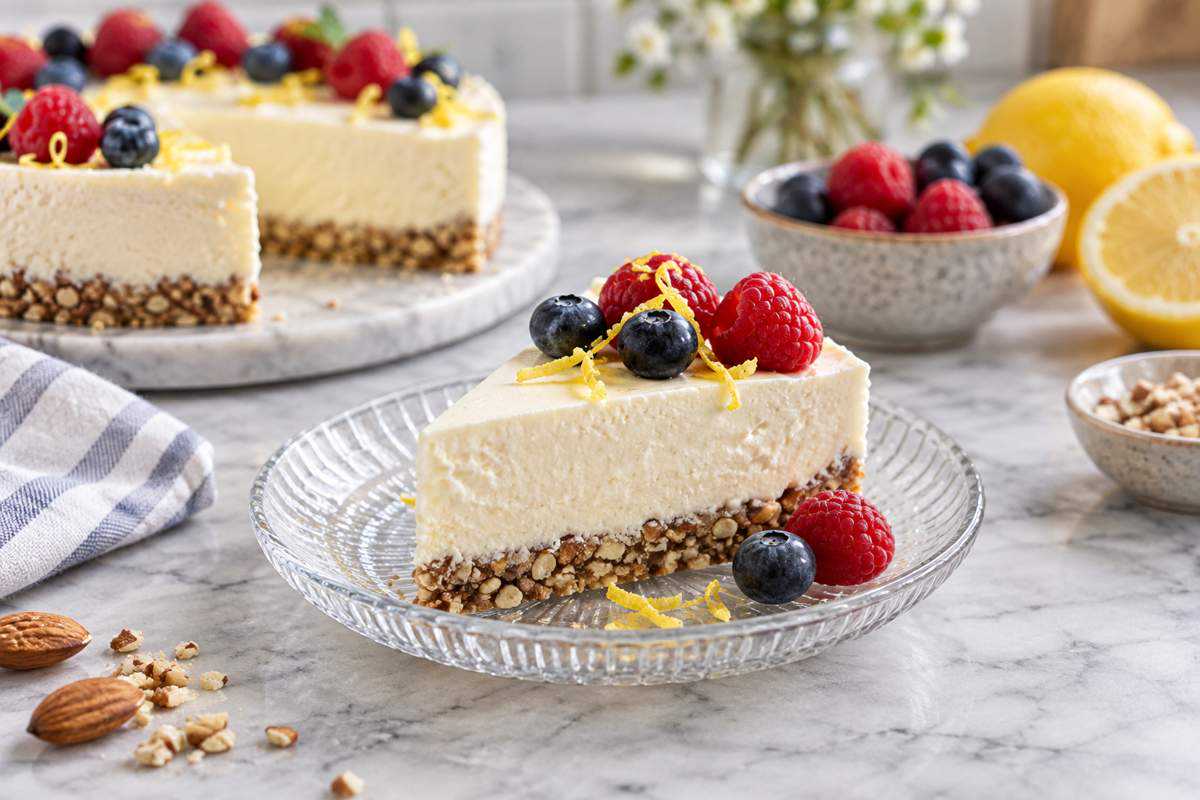
Add extra lemon zest to the filling and replace part of the vanilla with a small amount of lemon extract if desired. Keep the lemon juice measured so the filling does not become loose. Top with a few berries, lemon zest, or unsweetened coconut.
Berries vary in carbohydrate, so use a small garnish rather than a large fruit layer. A thin berry sauce can be made by warming berries with lemon and a suitable sweetener, then cooling it completely before serving.
Flavor variation 2: chocolate cheesecake
Add unsweetened cocoa powder to the cream cheese mixture and increase the vanilla slightly. Cocoa absorbs moisture, so add it before folding in the whipped cream and adjust slowly. A small pinch of espresso powder can deepen the chocolate flavor.
Chocolate chips, whipped cream, and nut butter can all be added, but each changes the portion. Choose one topping instead of piling on every rich ingredient. For a snack-sized dessert, use a small jar and a light cocoa dusting.
Flavor variation 3: berry swirl
Make a small berry puree with raspberries or strawberries, lemon juice, and a suitable sweetener. Cool it completely. Spoon small dots over the filling and drag a toothpick through them before chilling. A thin swirl gives visual contrast without adding a large amount of fruit.
Do not add hot puree to the cream cheese mixture. Heat can soften the filling and make the texture uneven. Keep the swirl modest so the cheesecake still sets cleanly.
Flavor variation 4: coffee and cinnamon
Dissolve a small amount of instant espresso powder in the lemon juice or cream before adding it to the filling. Add cinnamon and vanilla. This variation is aromatic and may need less sweetener. If caffeine is a concern, use decaffeinated espresso powder.
Check flavored coffee products for sugar or syrup. Plain coffee powder gives more control. A light dusting of cinnamon or cocoa is enough for a finish.
Flavor variation 5: no-bake cheesecake cups
Use small jars instead of a springform pan. Press a thin crust into the bottom, add the filling, and chill. Jars make portioning easier and remove the need to cut a cake. They also make transportation more practical, provided they remain cold.
Keep toppings separate if the cups will be stored more than a few hours. Add berries, nuts, or cocoa close to serving. A jar should have headspace so the lid does not press into the filling.
Crust options
An almond flour crust is simple and tender. A chopped pecan or walnut crust adds texture but increases calories and allergy considerations. A seed crust can use pumpkin and sunflower seeds for a nut-free direction, but check cross-contact statements for serious allergies.
For a crustless cheesecake, grease the jars or pan lightly and chill the filling directly. This makes portions easier to control and removes a source of crumbs. It also creates a softer dessert, so serve it in a cup rather than trying to cut clean wedges.
The keto bread guide provides a useful reminder about ingredient and serving comparisons. A crust made with nuts and butter can be more energy-dense than the filling, so evaluate the entire dessert.
Texture troubleshooting
If the filling is too soft, it may not have chilled long enough, the cream may not have been whipped sufficiently, or the gelatin may not have dissolved or distributed properly. Chill longer before changing the recipe. If it remains soft, serve it in jars as a mousse rather than forcing a slice.
If the filling is grainy, the cream cheese may have been too cold, the sweetener may be coarse, or the gelatin may have clumped. Soften the cream cheese before beating, use powdered sweetener, and add dissolved gelatin slowly.
If the filling is lumpy, beat the cream cheese until smooth before adding liquid. Do not add all the lemon juice at once to cold, firm cheese. Scrape the bowl frequently.
If the crust is greasy, reduce the butter slightly or add more dry ingredient. If it crumbles, press it more firmly and chill it longer. A warm crust under a cold filling can soften quickly, so chill the crust first.
Portion and nutrition planning
Divide the whole recipe into the number of servings you intend to eat. Eight small servings are different from four large wedges. Count the crust, cream cheese, cream, sweetener, toppings, and any chocolate or nuts.
Lower carbohydrate does not mean low calorie. Cream cheese, heavy cream, nuts, butter, and coconut can all contribute energy. If the cheesecake is part of a weight-management plan, keep the serving defined and avoid adding several rich toppings at once.
Check the cream cheese and yogurt labels for added sugar. Reduced-fat products may contain more thickeners or carbohydrate and can change the setting behavior. Use the ingredients that fit your preferences and dietary guidance, not a label claim alone.
Storage and food safety
Cover the cheesecake and refrigerate it promptly. Use clean utensils and keep the dessert cold. A no-bake cheesecake contains dairy and sometimes eggs or fresh fruit, so it is not shelf-stable. Follow appropriate local food-safety guidance for storage time.
Freeze individual slices or jars if you need to keep them longer. Thaw in the refrigerator and expect a small texture change. Do not repeatedly warm and chill the full cake. Add fresh fruit after thawing rather than freezing watery toppings into the filling.
Discard cheesecake with mold, sour odor, separation that smells fermented, or an uncertain temperature history. Do not cut away a questionable part and serve the rest.
Portable cheesecake snacks
Jar-style cheesecake is easier to transport than a large cake. Use a leak-resistant container, leave room under the lid, and keep it in an insulated bag with a cold pack. Carry toppings separately if you want crunch.
For work, choose one small jar and pair it with a protein or fresh food if the dessert is replacing a snack. For travel, avoid taking dairy-based cheesecake without reliable refrigeration. A dry, shelf-stable snack may be safer for long trips.
The office snack guide offers ideas for portioned containers and separate toppings. Portability depends on temperature control as much as on the recipe.
Honest label checks
Check cream cheese, yogurt, heavy cream, sweeteners, cocoa, nut flour, nut butter, and toppings. Look for added sugar, syrups, starches, and serving sizes. “Sugar-free” may refer to one ingredient while another contributes carbohydrate. “Keto” does not guarantee that a dessert fits every person.
Allergens may include dairy, eggs, almonds, walnuts, pecans, coconut, sesame, or soy depending on the formula. If you have a serious allergy, use appropriate product controls and prevent cross-contact. If you replace an ingredient, understand that the moisture and setting behavior may change.
No brand is required for this recipe. Product formulas, prices, and availability change. Use current labels and your own measurements when precise nutrition information matters.
Meal prep and serving ideas
Make the crust and filling one day ahead, then add toppings just before serving. Prepare small jars so portions are already defined. If you are making several flavors, keep the base neutral and divide it before adding cocoa, citrus, or coffee.
Store the cheesecake away from strong-smelling foods because dairy absorbs odors. Use a tray when transporting several jars. The meal-prep hub can help you plan desserts as controlled components rather than making a large container that is difficult to portion.
Serve the cheesecake after a meal with tea or coffee. If it is a snack, keep the serving small and consider whether you need protein or fruit alongside it. A dessert can be satisfying without becoming the entire day’s food structure.
Honest substitutions and disclosures
This recipe uses dairy and gelatin, but you can choose a tested vegetarian setting agent or a dairy-free formula if needed. A plant-based cream cheese may contain more water, starch, or sweetener and may not set the same way. Do not assume an equal volume substitution will work.
No-bake keto cheesecake is a rich dessert, not a medical food. It does not guarantee ketosis, weight loss, blood sugar control, or any other result. People with diabetes, kidney disease, allergies, digestive conditions, or medication-related restrictions should ask a qualified professional how the ingredients fit their needs.
This article provides general food information and recipe guidance, not individualized medical advice.
Frequently asked questions
Can I make it without gelatin? Yes, but the filling may be softer. Use a tested mousse-style formula or serve it in jars instead of expecting firm slices.
Can I use granulated sweetener? You can, but coarse crystals may remain gritty. Powdered sweetener usually blends more smoothly.
Can I use Greek yogurt? Yes, in a tested ratio. Yogurt adds tang and moisture, so it may require more setting support.
Why did the crust become soggy? It may have contained too much butter, or the filling may have been added before the crust chilled. Press firmly and chill first.
Is a whole cheesecake one serving? No. Divide it into clearly defined portions and count the full recipe ingredients.
Final takeaway
A no-bake keto cheesecake works when the crust is firm, the filling is evenly mixed, the setting method is used correctly, and the dessert is chilled long enough. Start with small servings, choose labels carefully, store the cake cold, and add toppings close to serving.
The recipe can be adapted with lemon, cocoa, coffee, berries, or spices, but each addition changes the final nutrition and texture. Treat the dessert as one planned part of your routine. That makes it easier to enjoy the creamy result without relying on the idea that low carbohydrate means unlimited.
For more small dessert and appetizer formats, browse the low carb appetizer ideas and keep the same habits: visible portions, honest labels, and safe storage.