A keto avocado bread recipe can be useful when you want a soft, savory slice without relying on wheat flour or a sweet packaged loaf. Avocado contributes moisture and a mild richness, while eggs and a suitable low-carbohydrate flour provide structure. The result is not identical to conventional sandwich bread, and it should not be sold as a zero-calorie substitute. It is a practical recipe with its own texture, storage needs, and portion considerations.
This guide gives a reliable base recipe, troubleshooting notes, several variations, and clear ways to serve it. It also explains how to check packaged ingredients, keep the loaf from becoming wet, store slices safely, and pack them for work or travel. The recipe is written for people who want an everyday lower-carbohydrate option, not for a single brand or a guaranteed nutritional outcome.
Before baking, visit the snack ideas hub if you need ideas for using a slice as part of a measured snack rather than turning the whole loaf into an unplanned grazing food.
What avocado does in bread
Ripe avocado adds fat, water, and a soft texture to a quick bread. It can make the crumb tender, but that moisture is also the main technical challenge. Too much avocado, an underbaked center, or a small pan can produce a loaf that looks done on the outside and remains gummy inside. The recipe therefore uses a moderate amount of avocado and a baking method that allows the center to set fully.
Avocado has a subtle flavor, so the final loaf can be savory or lightly neutral. Garlic, herbs, scallions, chili, and seeds push it toward a savory snack. Cinnamon or a small amount of approved sweetener can create a breakfast-style version, but the avocado flavor may still be noticeable. Avoid assuming that a sweet variation is automatically low carbohydrate; sweeteners, nut flours, and toppings all need their own label checks.
Do not use an avocado that smells fermented or has extensive dark, watery flesh. Small surface discoloration can be trimmed away, but a spoiled fruit will add off flavors and excess liquid. The best avocado for baking is soft enough to mash smoothly but not leaking water.
Base keto avocado bread recipe
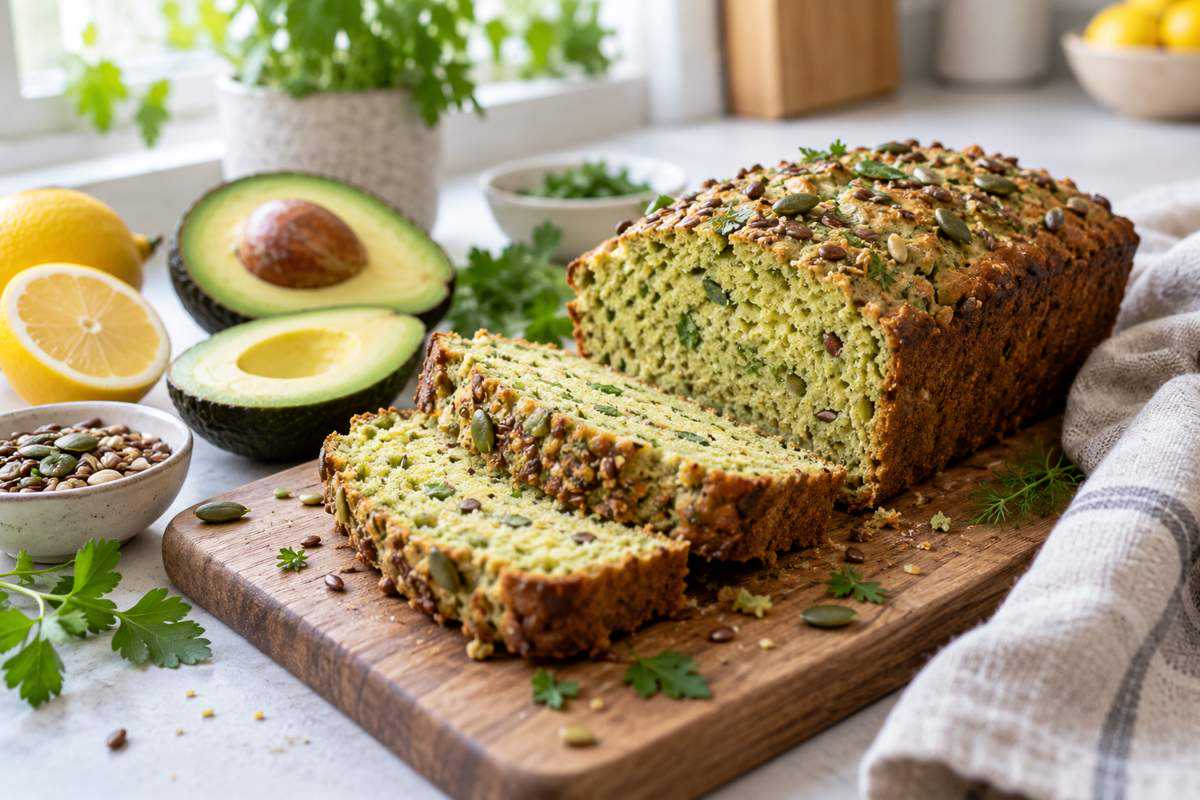
This recipe makes one small loaf of about eight slices. Gather one medium ripe avocado, three large eggs, one cup of fine almond flour, two tablespoons of ground flaxseed, one teaspoon of baking powder, one-half teaspoon of salt, one tablespoon of olive oil or melted butter, and one tablespoon of lemon juice. Optional additions include one teaspoon of garlic powder, one tablespoon of chopped parsley, two tablespoons of grated parmesan, or one tablespoon of sesame or pumpkin seeds.
Heat the oven to 350°F or 175°C. Line a small loaf pan with parchment, leaving enough paper over the long sides to lift the bread out later. Mash the avocado until nearly smooth. A few small pieces are acceptable, but large pieces can create damp pockets. Beat in the eggs, oil, and lemon juice until the mixture is evenly combined.
In a second bowl, whisk the almond flour, flaxseed, baking powder, salt, and any dry seasonings. Fold the dry ingredients into the avocado mixture just until no dry streaks remain. Do not beat the batter aggressively. Overmixing can make it dense, while uneven mixing can leave pockets of flour or baking powder.
Scrape the batter into the prepared pan and smooth the top. Sprinkle on seeds if using them. Bake for approximately thirty-five to forty-five minutes, depending on the depth of the pan and the moisture in the avocado. The top should feel set, the edges should pull slightly away from the parchment, and a skewer inserted in the center should come out with a few moist crumbs rather than wet batter.
Let the loaf cool in the pan for ten minutes, then lift it onto a rack. Wait until it is fully cool before slicing. Warm bread can appear gummy even when it will firm as it cools. Use a serrated knife and make deliberate slices. If the center is still wet, return the loaf to the oven for several minutes and check again rather than slicing and hoping it will set on the counter.
Why the ingredients matter
Almond flour supplies body and a tender crumb, but different brands vary in grind and moisture. Finely milled flour usually gives a more cohesive loaf. Coarse meal can produce a crumbly texture. Ground flaxseed helps absorb moisture and adds structure, yet too much can make the bread heavy and slightly bitter. If you replace it with another seed meal, expect the liquid balance to change.
Eggs act as both liquid and binder. Large eggs are more consistent than mixing eggs of unknown size. If you use a smaller egg, the batter may be thick; if you use extra-large eggs, it may be loose. Baking powder supplies lift, but check that it is fresh. Old leavening can leave a dense loaf that looks like an avocado problem.
Lemon juice adds acidity and helps keep the flavor bright. It also reacts with baking powder, so mix the batter shortly before baking. Oil or melted butter contributes tenderness. If you omit it, the bread may still bake, but the crumb can feel dry around the edges. Salt is not merely for taste; it helps the loaf avoid a flat, vegetal flavor.
Flavor variation 1: herb and garlic loaf
Add garlic powder, chopped parsley, chives, and a small amount of grated parmesan to the base. Use black pepper and lemon zest to sharpen the flavor. This version works with eggs, chicken salad, tuna, or a bowl of soup. Keep fresh herbs dry before chopping because excess water can make the center softer.
If you use jarred minced garlic, drain it well and measure it. Prepared garlic products may contain oil, salt, or preservatives. A large quantity of cheese can make the loaf salty and dense, so start with a tablespoon or two. Serve a slice with a protein and crisp vegetables rather than treating it as a standalone meal.
Flavor variation 2: seed and scallion loaf
Fold in sliced scallions and sprinkle the top with sesame, pumpkin, or sunflower seeds. Seeds add crunch and visual appeal, but they are also energy-dense. Measure them if the bread is part of a weight-management plan. Toasting the seeds lightly before adding them can deepen flavor without requiring more oil.
This variation is suitable for breakfast or packed lunch. Slice it after cooling, then keep the slices in a sealed container with parchment between them. If the bread will travel, carry a protein topping such as egg or turkey separately so the slices do not become wet.
Flavor variation 3: breakfast-style avocado bread
For a neutral breakfast loaf, omit garlic and chili. Add cinnamon, vanilla, and a suitable sweetener only if they fit your eating plan. Keep expectations realistic: avocado bread will taste more like a moist quick bread than a fluffy wheat loaf. A small amount of lemon zest can make the flavor cleaner.
Check the sweetener label and the total amount used. Some granulated products contain sugar or fillers that contribute carbohydrate. Nut flours can also vary. Serve a small slice with plain yogurt, eggs, or berries that fit your plan rather than piling on several sweet toppings.
How to prevent a gummy center
The most common problem is too much moisture relative to the dry ingredients. Use the edible weight of a medium avocado rather than adding a very large fruit. Mash it and look for excess liquid; if the flesh is unusually watery, drain it briefly. Do not replace almond flour with coconut flour at the same ratio. Coconut flour absorbs much more liquid and requires a separate formula.
Pan size matters. A narrow, deep pan creates a tall center that takes longer to bake. If the top browns before the center sets, loosely cover it with foil and continue baking. Do not raise the oven temperature to force the center to cook; that usually produces a dark crust and a wet middle.
Cooling is part of baking. Let the loaf sit on a rack so steam can escape. Cutting it while hot compresses the crumb and makes it seem underbaked. If a fully cooled loaf is still wet, slice it and toast the slices gently. For future batches, reduce avocado slightly or add a little more flaxseed, then record the change so you can reproduce the result.
Portion and nutrition considerations
Each recipe’s nutrition depends on avocado size, flour brand, egg size, oil, toppings, and final number of slices. Count the whole batch, then divide by the number of slices you actually make. A loaf cut into six thick pieces has a different per-slice contribution from a loaf cut into ten thin pieces. Use the nutrition information on your own ingredients if you need precise numbers.
Lower carbohydrate does not mean unlimited. Almond flour, avocado, oil, cheese, and seeds can all add meaningful energy. If the bread is being used for weight management, choose a defined serving and pair it with protein or vegetables. If it is being used to replace a higher-carbohydrate bread for a medical reason, follow the carbohydrate-counting method recommended by your clinician.
Check sodium when adding parmesan, seasoning mixes, deli meat, smoked fish, or salted seeds. If you need a lower-sodium loaf, use herbs, lemon zest, garlic, and pepper for flavor. If you have a nut allergy, almond flour is not an appropriate ingredient; use a tested nut-free formula rather than improvising a direct swap.
Ways to serve the loaf
Serve a savory slice with scrambled eggs, a boiled egg, tuna, chicken salad, or cottage cheese if dairy fits your plan. Add cucumber, radish, greens, or tomato for freshness. The bread can also be toasted and topped with mashed egg, salmon, or a measured amount of avocado, but remember that avocado on avocado bread doubles the main ingredient. That may be enjoyable, yet it is not the only possible pairing.
Use the loaf as a base for an open-faced lunch. Add leftover chicken, herbs, mustard, and crisp vegetables. Use a napkin or parchment underneath because moist toppings can soften the crumb. For a snack, half a slice with a protein topping may be more appropriate than a large sandwich.
If you want to compare the recipe with a packaged option, read the keto bread product guide. Compare serving size, fiber, total carbohydrate, added sugar, protein, sodium, ingredients, and texture. A homemade loaf gives you ingredient control, but a packaged loaf may be more convenient on busy days.
Storage and freezing
Because this loaf contains avocado and eggs, it should be cooled promptly and stored in a sealed container. Refrigerate it once cool and use clean utensils. Place parchment between slices so they do not stick. The bread may firm in the refrigerator, so toast or warm it gently before serving.
To freeze it, slice the fully cooled loaf and wrap portions separately. Put the wrapped slices in a freezer-safe bag, remove excess air, and label the date. Thaw in the refrigerator or toast from frozen on a low setting. Avoid repeatedly warming and cooling the entire loaf. That cycle worsens texture and creates unnecessary food-safety risk.
Watch for changes in smell, mold, excessive wetness, or an unusual fermented taste. Browning from avocado is not the same as spoilage, but visible mold is a reason to discard the bread rather than cutting around one spot. When in doubt, throw it out.
Making the bread portable
For work or travel, pack slices without wet toppings. Carry tuna, egg, chicken, or a dip in a separate sealed container and assemble at mealtime. A cold pack is important if the topping contains eggs, seafood, chicken, dairy, or mayonnaise. The bread itself is easier to carry than a wet sandwich, but it does not make perishable fillings shelf-stable.
Use parchment or a reusable wrap to protect the slices. A firm toasted slice is usually easier to transport than a warm soft slice. For an office snack, pair one slice with a boiled egg and cucumber. For a more substantial lunch, use two thin slices with a measured chicken filling and a side salad.
The office snack guide has additional ideas for keeping components separate. That same approach works with avocado bread: protect the crumb, protect the filling, and assemble only when you are ready to eat.
Label checks for ingredients and substitutes
Fresh avocado, eggs, almond flour, flaxseed, baking powder, lemon, and spices have straightforward labels, but prepared ingredients can be less predictable. Some baking mixes contain sugar or starch. Some seed blends contain sweeteners. Some grated cheese products contain anti-caking agents. Read the ingredient list and serving size rather than relying on front-of-package language.
If you use a store-bought avocado spread, check whether it contains oil, sour cream, sugar, or preservatives. A spread can work in a sandwich, but it may not behave like fresh avocado in the batter. If you substitute a dairy-free cheese or egg replacement, test a small batch first because the moisture and binding properties may change.
No particular brand is required for this recipe. Ingredient recommendations are categories, not endorsements. Prices, formulas, and availability change, so use the current package label. People with celiac disease, severe allergies, diabetes, kidney disease, or other medical needs should select ingredients with guidance appropriate to their situation.
A simple prep schedule
On baking day, bring the avocado to the right ripeness, line the pan, weigh the flour, and preheat the oven before mixing. The batter comes together quickly, and delaying the bake after adding the acidic lemon juice and baking powder can reduce lift. While the loaf cools, prepare the toppings you plan to use.
For a week of meals, freeze half the slices and refrigerate the rest. Use fresh slices for breakfast, toasted slices for lunch, and thawed slices for a travel snack. Make one protein batch such as chicken or eggs, then change the seasonings. The meal-prep hub can help you think in components rather than cooking a completely different meal every day.
Keep a short record of pan size, avocado weight, baking time, and final slice count. Small changes in fruit size and flour grind can change the result. Recording them turns an experimental recipe into one you can repeat.
Common questions
Can you taste the avocado? In a savory loaf, herbs, lemon, and garlic can make the flavor subtle. A very ripe or overripe avocado may be more noticeable. A neutral breakfast version can have a mild green note.
Can you use coconut flour? Not at the same volume as almond flour. Coconut flour absorbs much more liquid, so use a tested recipe designed for it. A direct substitution usually creates a dry or crumbly loaf.
Can you make the loaf egg-free? Eggs provide important structure. A commercial egg replacer may work, but the result will likely be different. Test a small batch and expect to adjust liquid and baking time.
Can you use frozen avocado? Thawed avocado may release more water. Drain it well, mash it smoothly, and expect the loaf to need a little additional baking. Fresh ripe avocado usually gives the most predictable texture.
Is avocado bread automatically keto? No. The entire ingredient list, portion, and serving context matter. A loaf can be lower carbohydrate and still be too energy-dense for a particular goal or unsuitable for an allergy.
Final takeaway
A keto avocado bread recipe works best when you respect its moisture. Use a moderate avocado, a reliable dry mixture, fresh leavening, a lined pan, and enough cooling time. Slice only after the center has set. Pair the bread with protein and vegetables, keep perishable toppings cold, and check labels on every packaged substitute.
The loaf is a useful tool, not a promise. It can make a lower-carbohydrate breakfast or portable snack more satisfying, but it still belongs in a complete eating pattern. Start with one batch, record what worked, and adjust the serving size to your needs.
For more small combinations, browse the low carb appetizer ideas. A slice of avocado bread can be the base for a snack, but the protein, vegetables, storage plan, and portion are what make the final choice practical.